
Blog
Industrial CCTV Camera Guide and Price Tips for Manchester Sites (Warehouses, Yards, and Workplaces)

Learn how to choose an industrial cctv camera setup for UK warehouses, yards, and workplaces by planning coverage first, matching camera types to risks, and budgeting for total installed cost.
- Start with site-first planning: map high-risk zones (gates, loading bays, entrances, stock areas), decide whether each needs overview, identification, or both, then choose cameras and lenses to match distance and detail.
- Pick camera types based on the job: turrets for reliable IR in warehouses/covered areas, bullets for outdoor perimeters and longer sight lines, and PTZ as a supplement—not a replacement—for fixed coverage at choke points.
- Prioritise specs that protect evidence quality in real conditions: strong low-light performance for yards and winter light, WDR for entrances and roller shutters, plus weather sealing and vandal resistance where exposure is high.
- Choose IP/NVR for new installs and future expansion; consider analogue/DVR upgrades when existing coax is solid and goals are modest—then invest where it counts most (identification zones).
- Budget for total cost, not just camera units: retention days drive storage, installation access/cable routes can outweigh kit price, and standardising models plus proper commissioning reduces costly revisits.
If you’re choosing an industrial CCTV camera setup for a Manchester site, focus on reliable coverage and usable evidence first, then match the kit to the environment.
- Plan coverage by risk zones (gates, loading bays, entrances, high-value stock) and decide where you need identification vs general overview.
- Choose camera types and lenses to fit distance and lighting (turrets for strong all-round performance, bullets for perimeters, varifocal where distances change).
- Prioritise low-light performance, WDR, and rugged ratings (weather/dust sealing and vandal resistance) for dependable footage in Manchester’s changeable weather and shorter winter days.
- Budget for the full system cost, not just cameras, especially storage/retention, cabling/PoE, safe access, and commissioning.
- Use wireless only where cabling is genuinely impractical, and treat it as a targeted solution that still needs stable power and a robust link.
These points keep the decision outcome-led: you’re designing for evidence quality and reliability across real working conditions, not just comparing spec sheets.
Choosing an industrial CCTV camera setup for a warehouse, yard, or workplace is less about chasing the newest features and more about getting reliable coverage where it matters. Manchester industrial sites have different day-to-day realities from retail or domestic settings: longer sight lines, wet and windy weather, variable lighting, and higher-value assets moving through predictable choke points. When cameras are chosen without a clear plan, you often end up with blind spots at gates, unreadable footage in poor light, or a system that’s painful to review when an incident happens.
The goal of this guide is to help facility managers and business owners make confident decisions around coverage, evidence quality, remote access, and long-term reliability. It’s also written with practical procurement in mind, so you can balance performance with budget and avoid common oversights that inflate the total cost later.
Table of Contents
Why an industrial CCTV camera setup is different (and what Manchester sites need most)

Industrial sites tend to be bigger, busier, and harder on equipment than most other environments. Warehouses and yards often involve long distances across open areas, with key details (faces, vehicle number plates, pallet labels) happening far from the nearest mounting point. Factories and workshops add their own challenges: dust, vibration, temperature swings, and reflective surfaces that can wash out footage under strong lighting. Forklift traffic and changing layouts also matter. Yesterday’s “perfect angle” can become tomorrow’s blocked view if racking, containers, or parked trailers move. Multi-entrance sites add complexity too, because you’re not just watching one door, you’re protecting several access points and routes across the property.
That’s why industrial CCTV decision-making should start with outcomes, not gadgets. You’re usually aiming for a mix of deterrence, safe operations, incident investigation, and evidence that stands up when you need it. “Evidence quality” is practical: can you identify a person at a staff entrance, confirm what happened at a loading bay, or track a vehicle through the yard without losing it in darkness, rain, or glare?
Remote access matters as well, especially for owner-managed sites or multi-site operations around Greater Manchester, but it needs to be dependable rather than flashy. Above all, reliability is what pays back. Your industrial CCTV camera devices need to keep working through winter, heavy rain, and busy peak periods without leaving gaps when something goes wrong.
Site-first planning: map risks, coverage, and compliance before choosing kit

The fastest way to overspend on CCTV is to buy cameras first and plan later. A site-first approach helps you choose the right quantity and types of cameras, and it reduces the risk of paying for rework after installation. Start with a walkthrough (or a marked-up site map) and list the places where incidents are most likely or most costly: vehicle access points, high-value stock, and areas where people are isolated.
Then decide what you need at each location: overview monitoring, clear identification, or both, because that directly affects lens choice, mounting height, and camera specification. This also helps you avoid a common mistake on industrial sites: asking one camera to “cover everything,” then finding out you can’t identify anything.
In practice, many facilities can build a solid initial plan by prioritising repeatable zones. These are usually gates and perimeter lines, loading bays, roller shutters, internal stock aisles, and staff or visitor entrances. From there, estimate camera count by asking a simple question at each zone: what’s the distance to the subject, and what level of detail must be captured?
Mounting position matters as much as the camera model, because backlighting, vehicle headlamps, and low winter sun can ruin usable footage even with a good sensor. Planning also includes access for installation and maintenance. If you need a lift or out-of-hours work to mount cameras safely, it will affect budget and timeline.
Manchester sites also need to cover basic operational compliance without turning the project into a legal exercise. Clear signage is a practical necessity because it sets expectations and supports transparency for staff and visitors. Retention expectations should be agreed early: how many days you want to keep footage is mainly a storage question, and storage is often under-specified in first quotes. Finally, align with internal policies on who can view footage, how remote access is controlled, and how exports are handled when incidents occur.
Choosing the best CCTV camera for industries: camera types that solve real problems
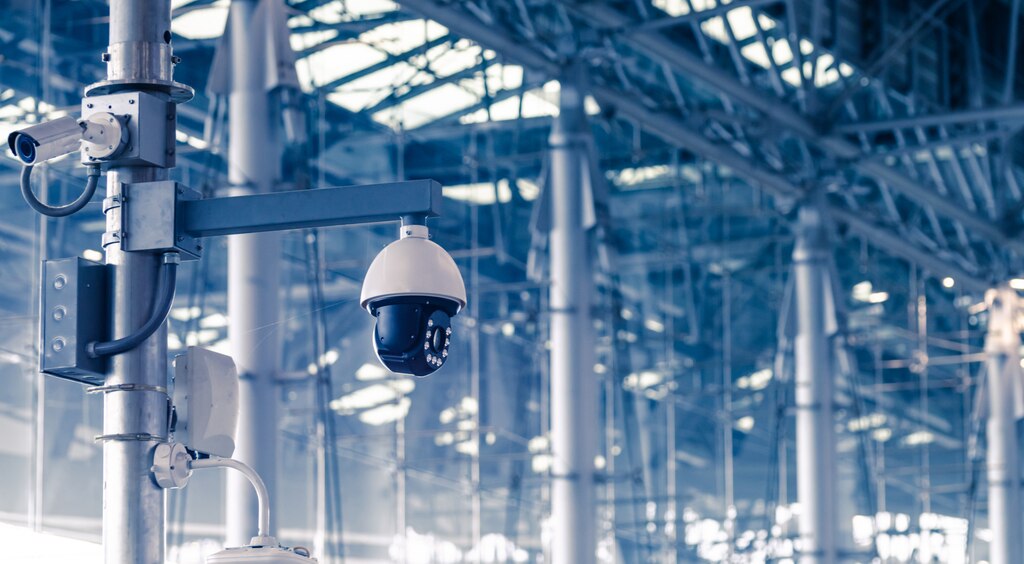
When buyers compare the best CCTV camera for industries, it helps to translate camera categories into the problems they solve on site. Domes are commonly used indoors because they look neat and can be more discreet, but in some industrial settings they can suffer from glare if the dome cover gets dirty or scratched. Turret cameras are often a strong all-round choice for warehouses and covered areas because they handle IR night viewing well and are easier to position precisely. Bullet cameras suit longer runs and outdoor perimeters because they typically support larger housings, better heat management, and clearer directional aiming.
The “best” type is rarely universal; it’s usually a mix that matches each zone’s risks and viewing distance.
| Camera type | Common fit on industrial sites | Practical watch-outs |
|---|---|---|
| Dome | Indoors where a neat, discreet look is preferred | Can suffer from glare if the dome cover gets dirty or scratched |
| Turret | Warehouses and covered areas; strong all-round choice | Generally low-glare and straightforward to aim; choose a suitable housing rating for dusty or exposed areas |
| Bullet | Outdoor perimeters and longer runs; clearer directional aiming | More visible and directional; plan mounting height and angle to reduce tampering risk and headlight flare |
Lenses and coverage: fixed, varifocal, and PTZ
Lens choice is where industrial systems often win or lose value. Fixed-lens cameras can be cost-effective when distances are consistent, such as a corridor-like aisle or a small entrance area. Varifocal lenses offer flexibility where distances change, like a loading bay where you need both a wide view for context and a tighter view for identification.
PTZ (pan-tilt-zoom) cameras can add value in large yards or where a live operator can track movement, but they are not a replacement for fixed coverage. If a PTZ is looking one way when an incident happens elsewhere, you may miss critical evidence. PTZ works best as an addition to fixed cameras covering key choke points.
Key specifications for Manchester warehouses and yards
Specifications should be chosen based on your environment, not a brochure. Low-light performance is essential for yards, darker winter afternoons, and poorly lit access routes, and it’s often the difference between usable footage and a silhouette. Wide Dynamic Range (WDR) helps when bright daylight and deep shadows appear in the same frame, which is common at roller shutters, loading doors, and entrances with skylights.
IR range matters outdoors and across long warehouse spans, but it needs to be realistic: usable IR is not just about distance, it’s about clarity at that distance. For industrial sites, ingress protection (weather and dust sealing) and vandal resistance are practical requirements, especially in accessible areas or where vehicles pass close to camera positions.
Analytics: useful when they reduce workload
Analytics can be valuable when they reduce workload rather than add noise. Simple, reliable functions like line crossing at gates, intrusion detection for out-of-hours yards, or object removal alerts near high-value stock can speed up response and make video search far quicker.
The key is to deploy analytics where the scene is controlled, such as a defined boundary line or a restricted doorway, rather than in chaotic areas with constant forklift traffic and shifting shadows. Done well, analytics help you focus on the few moments that matter instead of scrubbing through hours of footage.
IP vs analogue (NVR vs DVR): what to pick for upgrades vs new installs
For new installs, IP systems with an NVR are usually the straightforward choice because they scale well, support higher resolutions, and tend to offer better remote access and smarter features. IP also works well with modern networks and PoE (Power over Ethernet), which can simplify cabling when designed properly. For facilities that expect to expand, more entrances, a bigger yard, new units on the same estate, IP is typically easier to grow without painting yourself into a corner.
Analogue systems using a DVR can still be cost-effective when you’re upgrading an existing site with good coax cabling already in place. If cable routes are complex and already installed through walls, trunking, or external runs, reusing them can reduce labour and disruption. Modern HD analogue options can deliver strong results for many overview tasks, especially indoors, while keeping costs controlled. The decision should be practical: if the current infrastructure is sound and the goals are modest, analogue can make sense; if you need higher detail, future expansion, or advanced analytics, IP generally provides a better long-term platform.
| Decision factor | IP (NVR) | Analogue (DVR) |
|---|---|---|
| Best fit | New installs; sites expecting expansion | Upgrades where good coax cabling already exists |
| Strengths highlighted | Scales well, supports higher resolutions, better remote access, smarter features; works well with PoE | Cost-effective when reusing existing cable routes; reduces labour and disruption; modern HD analogue can suit overview tasks |
| When it’s usually the better long-term platform | When you need higher detail, future expansion, or advanced analytics | When goals are modest and existing infrastructure is sound |
Industrial wireless CCTV camera system in Manchester: when wireless helps, and when it’s a false economy
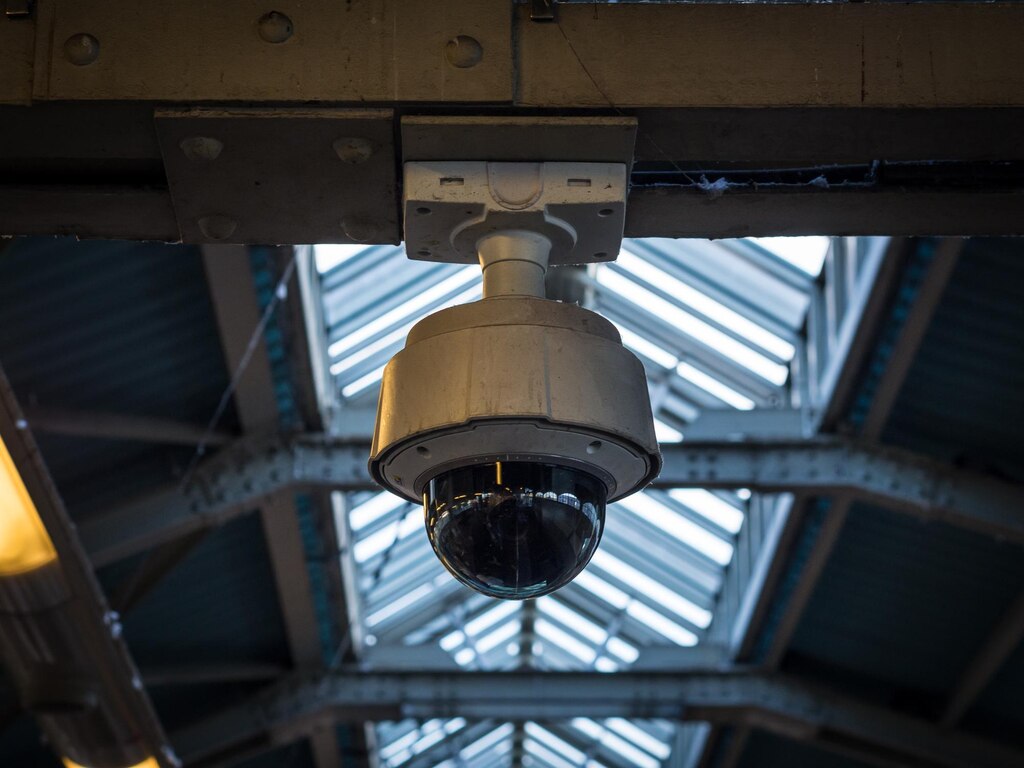
An industrial wireless CCTV camera system can be a smart solution in specific scenarios, especially where running cable is genuinely difficult or disruptive. Remote outbuildings, temporary site offices, and rapid deployments are common examples, as are sites where trenching or high-level cable routes would be expensive. Wireless links can also help when a site is evolving and you expect buildings or access routes to change, because they add flexibility without major rewiring.
However, “wireless video transmission” is not the same as “no installation effort.” The camera still needs reliable power and a stable mounting position. If those basics are missed, wireless becomes a source of intermittent faults rather than a cost saver.
Wireless performance depends on signal strength, interference, and available bandwidth, all of which can fluctuate on busy industrial estates around Manchester. Metal cladding, racking, moving vehicles, and machinery can degrade Wi-Fi, and even a good link can struggle if too many devices compete for airtime. For critical perimeters, many sites prefer wired connections or dedicated point-to-point wireless bridges designed for stable outdoor links, rather than consumer-style Wi-Fi.
Even then, you need to plan for weather exposure, mounting height, and line-of-sight to avoid dropouts. The most accurate way to view wireless is as a targeted tool for hard-to-reach areas, not a blanket alternative to structured cabling across an entire site.
Industrial CCTV camera price in Manchester and the UK: what drives costs and how to budget realistically

Industrial CCTV camera price discussions often focus on the camera unit, but total installed cost is shaped by several practical factors. Camera quality tier matters because better sensors, stronger low-light performance, and robust housings cost more, but they can reduce operational headaches and improve evidential value. Lens choice can also shift budgets: varifocal models may cost more upfront, but they reduce the risk of needing a swap if the initial view is too wide or too tight.
Recording hardware and storage are major drivers, especially when you want longer retention or higher resolutions across many channels. Installation realities, cable routes, network switches, lifts and access equipment, and commissioning time, often outweigh the price difference between two similar cameras.
How to allocate budget by risk zone
A realistic budget is built by deciding where higher specification genuinely pays back. Gates, loading bays, and staff entrances are typically identification zones, so they benefit from better low-light performance, WDR, and the right lens to capture faces or number plates at the right angle. Less critical areas may only need reliable overview coverage, which can be delivered with standard models.
Standardising camera models across the site is also a practical cost control, because it simplifies spares, reduces troubleshooting time, and makes future additions easier. It’s wise to avoid underspending on storage and power protection as well, because dropped recordings and corrupted footage are costly failures when you actually need the system.
Checklist to keep budgeting grounded
- Decide retention days first, then size storage to match your camera count and resolution.
- Prioritise higher-spec cameras for identification points (gates, entrances, loading bays) and use standard models for general coverage.
- Include cabling, PoE switching, and network considerations in the first quote, not as “extras later”.
- Plan for safe access (lifts, out-of-hours work) where mounting height or site rules require it.
This checklist helps you compare quotes like-for-like, because it forces the hidden cost drivers (retention, cabling, access, and commissioning) into the conversation early.
Cost-saving moves that don’t compromise security
Saving money on industrial CCTV is safest when it comes from smarter design rather than cheaper hardware across the board. A common value-led approach is to combine overview cameras for context with dedicated identification cameras aimed at faces, number plates, or transaction points like goods-in doors. Varifocal lenses can be a good investment where distances change or where you want to fine-tune framing during commissioning, especially on yards and loading areas.
Staged rollouts also work well for larger sites: you can secure the highest-risk zones first, then expand coverage as budgets allow without redesigning the whole system. The key is to maintain a consistent platform: compatible cameras, recorder capacity planned for growth, and a clear plan for adding channels and storage later.
- Use a mix of camera types: dedicate higher-detail models to risk points and use dependable standard cameras for overview areas.
- Standardise on a small set of models and accessories to simplify spares and reduce maintenance time.
- Design for expansion: choose an NVR and PoE capacity that can accommodate future cameras without replacement.
- Commission properly: correct angles, focus, and night settings prevent costly revisits and “upgrade by frustration”.
These savings protect outcomes: you’re not cutting corners on evidence quality, you’re reducing rework, simplifying maintenance, and avoiding platform changes later.
Getting it right with CUCCTV in Manchester: trade support, trusted brands, and one-stop supply

Industrial CCTV works best when the kit matches the site plan, and the supply chain supports you through delivery, compatibility, and ongoing expansion. CUCCTV helps Manchester buyers do this with practical, project-focused support rather than one-size-fits-all recommendations. As an authorised Dahua UK partner and distributor for other leading brands, CUCCTV supplies authentic stock with dependable warranties and manufacturer-backed compatibility.
That matters on industrial sites, where mixing unknown components can lead to unreliable remote access, inconsistent video settings, and time lost diagnosing avoidable issues. With the right guidance up front, you can build a system that’s clear, robust, and easy to operate day to day.
For installers and trade customers, dedicated account management turns CCTV procurement into a smoother workflow. A named account manager can help you translate a site plan into a compatible bill of materials: industrial CCTV camera models, NVRs, storage, PoE switches, cabling, monitors, mounts, and lighting where needed. This reduces the risk of missing small but essential items that delay installs, especially on multi-entrance sites or complex warehouses.
It also supports faster quoting and more consistent specification across multiple projects or sites, which is valuable for facilities teams managing rollouts over time. For Manchester-area customers, CUCCTV’s presence locally, alongside nationwide delivery, adds flexibility when you need product quickly or prefer in-person advice.
If you’re planning a new CCTV installation or reviewing an upgrade, CUCCTV is here to help you secure what matters most with clear guidance and reliable supply. Get in touch with your site basics: key zones, approximate distances, and retention goals, and we’ll help you match the right cameras, recorder, and accessories to your workplace, warehouse, or yard. Whether you’re buying as a business owner or setting up a trade account for ongoing projects, our team can support you from first plan to final order.
Frequently Asked Questions about industrial CCTV cameras
How many industrial CCTV cameras do I need for a warehouse or yard?
It depends on how many risk zones you have and what level of detail you need in each one. Most industrial sites use a mix of overview coverage (to show context and movement) and identification coverage (to clearly show faces or vehicle details). A helpful way to estimate is to walk the site and list zones such as gates, loading bays, staff entrances, goods-in and goods-out doors, high-value storage, and any isolated areas. For each zone, note the distance to the subject and whether you need identification or just visibility. That information usually determines both the camera count and the lens type more accurately than choosing a number based on site size alone.
What specs matter most for an industrial CCTV camera in Manchester weather?
Manchester sites typically benefit from strong low-light performance, Wide Dynamic Range (WDR), and rugged physical ratings. Low-light capability keeps footage usable during darker winter afternoons, overnight shifts, and poorly lit access routes. WDR helps at entrances and loading doors where bright daylight and dark indoor areas appear in the same image. For outdoor cameras, weather and dust sealing (ingress protection) and vandal resistance are practical requirements, especially where vehicles, ladders, or members of the public could reach the unit. These specs don’t just improve image quality; they reduce the chances that your footage becomes unusable when you actually need it.
Is an industrial wireless CCTV camera system reliable for yards and perimeters?
Wireless can be reliable when it’s designed as a targeted solution and the environment supports a stable link. The main issues on industrial estates are interference, metal structures (cladding, racking), changing line-of-sight as vehicles move, and bandwidth competition from other devices. If the camera still has solid power, a stable mounting point, and you use an appropriate wireless method (often a dedicated point-to-point bridge rather than basic Wi-Fi), wireless can work well for remote buildings or difficult cable routes. For critical perimeters and high-risk entry points, many sites still prefer wired connections because they’re more consistent and easier to troubleshoot.
What affects industrial CCTV camera price beyond the camera itself?
Total cost is usually driven by storage and retention, installation complexity, and commissioning time. Longer retention and higher resolution increase storage needs quickly, especially across multiple cameras. Cabling routes, PoE switching, and network design can add significant labour and equipment costs, particularly on large sites with high mounting positions. Safe access (lifts, out-of-hours work, permits) also affects installation budgets. Finally, commissioning (proper focus, correct angles, and tuned night settings) can be the difference between a system that records video and one that produces usable evidence, so it’s worth including in early quotes rather than treating it as optional.
Should I choose IP (NVR) or analogue (DVR) for an industrial CCTV upgrade?
For new installations, IP with an NVR is usually the best long-term platform because it scales well, supports higher resolution, and tends to offer better remote access and modern features. For upgrades, analogue with a DVR can be a practical choice when existing coax cabling is in good condition and difficult to replace, helping reduce disruption and labour costs. The best approach is outcome-led: if you need clearer identification, expansion, or analytics, IP typically delivers more flexibility. If your main goal is reliable overview coverage and your existing infrastructure is solid, modern HD analogue can still be cost-effective.
