
Blog
How to Compare Dahua Cameras and Find the Right Fit


A structured Dahua camera comparison guide helps UK business buyers match the right camera to their site conditions, infrastructure, and compliance needs.
- Resolution is not the most important factor — low-light performance, lens type, and network compatibility often have a greater impact on real-world footage quality for UK commercial sites.
- Dahua’s product range spans three practical tiers (entry-level, WizSense AI, and WizMind/panoramic), and choosing the right tier depends on your site’s risk level and analytics needs, not just budget.
- Storage, PoE capacity, and recorder compatibility must be calculated before finalising any specification — selecting 4K cameras without accounting for infrastructure is a common and costly planning error.
- Outdoor cameras should be matched to IP67 weatherproofing and appropriate IR range for your coverage distances, rather than defaulting to the highest-spec model available.
- A site survey by a qualified professional and a trade account with a dedicated account manager both deliver more accurate specifications than relying on datasheets or product catalogues alone.
Choosing a CCTV system for a commercial premises feels straightforward until you open a product catalogue and find dozens of models with overlapping specifications, unfamiliar acronyms, and price points that vary by hundreds of pounds. A structured comparison framework cuts through that noise by helping you evaluate cameras against your actual site conditions — not just a list of features on a datasheet. Whether you manage a single retail unit in the Northern Quarter or a multi-site distribution operation across Greater Manchester, the decisions you make at the specification stage will shape your system’s usefulness for years to come.
Dahua Technology is among the world’s largest producers of CCTV security solutions. That scale means the product range is genuinely broad — which is both an advantage and a challenge for buyers. This guide helps you compare options with confidence, understand where the meaningful differences lie, and arrive at a specification that matches your environment, infrastructure, and long-term goals.
Table of Contents
Why a Careful Camera Comparison Pays Off
It is tempting to treat a camera purchase like a consumer electronics decision — pick the highest resolution within budget and move on. That approach rarely produces a system that performs well in practice.
A 4K camera mounted in a dimly lit loading bay without the right low-light technology will produce worse footage than a well-chosen 5MP model with Starlight capability. Similarly, a high-resolution camera installed on a network that cannot handle the bandwidth demand will drop frames or overwhelm your recorder.
The right approach is to treat the specification process as a matching exercise. Your site has specific lighting conditions, coverage distances, mounting constraints, and network infrastructure. The camera you select should address those conditions first. Resolution, form factor, and price all matter — but they should be evaluated after you have established what your environment actually requires.
Dahua Camera Product Lines Explained
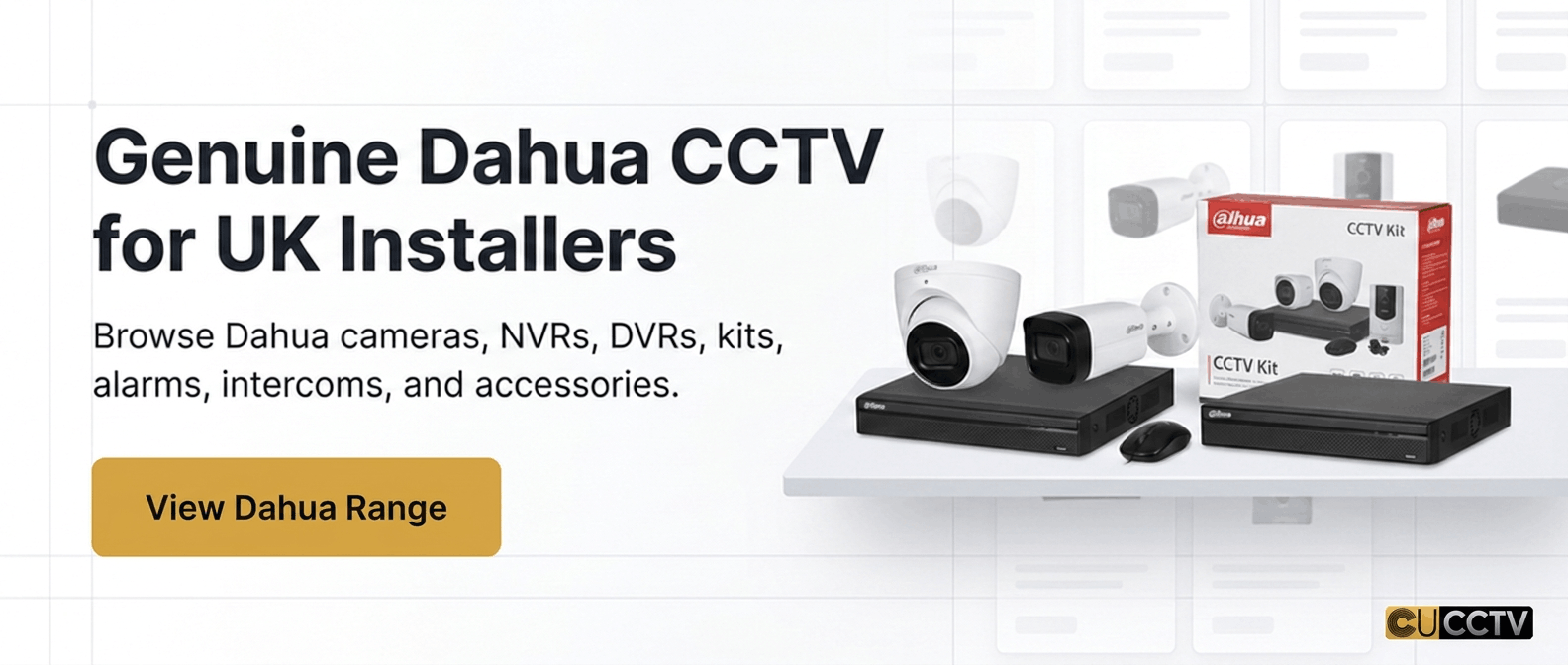
Dahua’s range spans resolutions from 2MP entry-level models up to 32MP multi-sensor panoramic cameras. In the UK market, most commercial buyers will encounter three practical tiers:
- Entry-level: Basic fixed-lens IP cameras suited to lower-risk indoor environments where identity verification at close range is the primary requirement.
- Mid-range (WizSense AI): Adds intelligent detection features such as person and vehicle classification, significantly reducing false alarm rates compared to standard motion sensors.
- Professional (WizMind and multi-sensor): Designed for complex environments requiring wide-area coverage or advanced analytics.
Understanding that WizSense and WizMind represent different capability levels — not just different price points — is the first step in narrowing your options. A dedicated Dahua WizSense vs WizMind comparison covers this in full.
| Tier | Product Line | Key Capability | Best Suited For |
|---|---|---|---|
| Entry-level | Standard IP | Fixed-lens, basic video capture | Lower-risk indoor environments, close-range identification |
| Mid-range | WizSense AI | Person and vehicle classification, reduced false alarms | Retail, offices, sites needing smarter motion detection |
| Professional | WizMind & multi-sensor | Face recognition, crowd density, behaviour analysis, wide-area coverage | Complex or high-security environments, large open sites |
IP vs Analogue: Which Technology Fits Your Site?
Most new commercial installations in the UK now use IP-based cameras. These transmit video over a network and offer higher resolution, remote access, and compatibility with intelligent analytics.
Analogue systems using DVRs remain relevant where existing coaxial cable infrastructure makes a full rewire impractical or too costly. If your premises already has legacy cabling, the Dahua NVR vs DVR decision becomes an infrastructure question as much as a technology one. For new installations or major upgrades, IP systems connected to a Network Video Recorder generally offer the better long-term investment — particularly as AI-driven features become increasingly standard across Dahua’s mid-range and above.
Fixed, Varifocal, and PTZ Lenses: What Is the Difference?
Lens type determines how much flexibility you have in defining a camera’s field of view, both at installation and afterwards.
- Fixed-lens cameras are pre-set to a specific focal length. They are cost-effective for locations with a clearly defined coverage requirement — a till point, a stairwell, or a corridor of consistent width.
- Varifocal cameras allow the installer to adjust the focal length within a specified range — valuable for car parks or warehouse aisles where the ideal field of view may only become clear once the camera is in position. Our fixed lens vs varifocal lens security camera guide examines this in detail.
- PTZ (pan-tilt-zoom) cameras add remote directional control, suited to large open areas where an operator needs to track movement across a wide zone — such as a logistics yard or a large retail floor.
| Lens Type | Field of View Flexibility | Installer Adjustability | Remote Directional Control | Typical Use Case |
|---|---|---|---|---|
| Fixed | Set at manufacture | None | No | Till points, corridors, stairwells |
| Varifocal | Adjustable within a range | On installation | No | Car parks, warehouse aisles, perimeter coverage |
| PTZ | Wide, operator-directed | Continuous remote adjustment | Yes | Logistics yards, large retail floors, open areas |
Camera Specifications That Genuinely Affect Performance
Resolution is the most cited specification but not always the most decisive one. Here is what genuinely affects how a camera performs on your site.
Resolution and Storage Demands
Higher resolution cameras produce sharper images and allow digital zoom without losing detail, but they increase demands on your network and storage. An 8MP (4K) camera generates significantly more data than a 5MP model, meaning your NVR, hard drives, and network switches must be specified accordingly. Choosing 4K across an entire site without accounting for storage capacity is a common planning error that leads to shorter footage retention or unexpected hardware costs.
Low-Light Performance for the UK Climate
For outdoor deployments across the North West, low-light performance is often more important than resolution. Overcast skies, frequent rainfall, and limited winter daylight mean cameras operate in poor light for extended periods throughout the year. Dahua offers two main approaches:
- Starlight technology uses a larger aperture and advanced sensor design to produce colour images in near-darkness without supplemental lighting — well suited to discreet monitoring where visible illumination is not desirable.
- Full-Color technology uses built-in white-light illuminators to maintain colour accuracy in low light — better suited where visible illumination also serves a deterrence purpose.
Weatherproofing Standards
IP ratings and IK impact resistance ratings should be verified against your site’s specific environmental conditions. Any camera mounted outdoors or in an exposed position should meet at least IP67 for UK external environments. This is especially relevant for sites across Greater Manchester where exposed positions face persistent wind, rain, and temperature variation.
Compression Format and Footage Retention
H.265+ encoding, available across much of Dahua’s current range, can substantially reduce storage consumption compared to older H.264 systems. This directly affects how long footage is retained before being overwritten — a factor that may be relevant to your insurance or compliance requirements. It is worth checking with your insurer or sector regulator if you have specific retention obligations, as these vary by industry.
Matching Camera Type to Your Site and Coverage Needs

Before finalising any specification, walk through your site with clear coverage goals in mind. Identify which access points must be monitored, which areas carry the highest risk, and whether any locations have inconsistent lighting or constrained mounting options. Answering these questions site by site is more reliable than applying a uniform camera type across an entire premises.
Indoor Surveillance Priorities
For offices, retail spaces, and reception areas, priorities typically include discreet form factors that do not create an oppressive atmosphere, sufficient resolution to identify individuals at relevant distances, and privacy-aware placement that avoids capturing areas where data protection considerations apply. Dome cameras with fixed or varifocal lenses are well suited to these environments. In retail — whether a city centre shop on Market Street or a neighbourhood convenience store in Salford — additional considerations include queue monitoring, till-point coverage, and integration with access control systems.
Outdoor and Perimeter Coverage
Outdoor installations require weatherproofing to at least IP67, IR range matched to your actual coverage distance, and lens selection that balances field of view against usable resolution at distance. Bullet and turret cameras with varifocal lenses are commonly specified for perimeter work. Multi-sensor panoramic cameras offer an efficient alternative for large open areas — such as industrial estates in Trafford Park or logistics sites around the Port Salford corridor — where multiple cameras would otherwise be required.
Infrastructure and Compliance Checks Before You Commit
Several checks are worth completing before any order is placed:
- Storage capacity: Calculate based on camera count, resolution, compression format, and required retention period. Many UK business insurers ask for a minimum of 31 days, though requirements vary by sector and policy — always confirm with your insurer directly.
- Network infrastructure: Assess switch capacity, PoE power budgets, and cable runs to confirm the system will function as intended without retrofitting.
- Recorder compatibility: Dahua’s ecosystem of NVRs and DVRs is designed to work within its own product family. Mixing recorder brands can introduce limitations in features or remote access functionality.
- Compliance requirements: Businesses in regulated environments such as healthcare, finance, or local authority premises may face specific requirements around data retention and access controls. Where requirements are unclear, seek written confirmation from your insurer or sector regulator before finalising a specification.
A site survey conducted by a qualified professional is consistently more accurate than a specification built purely from floor plans and datasheets.
When to Involve a Security Specialist
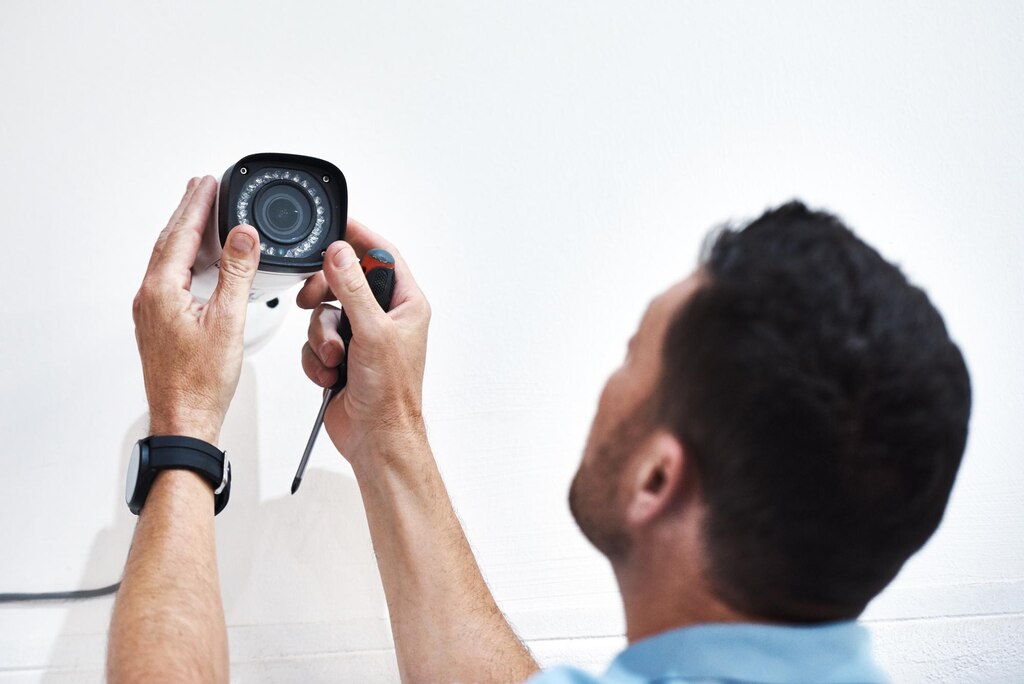
Larger or more complex sites benefit significantly from professional input at the specification stage. Mixed-use environments — a building that combines retail, office, and warehouse space, for example — often require a combination of camera types, lens configurations, and analytics capabilities that are difficult to balance without direct site experience.
Compliance-sensitive locations, or installations that need to integrate with existing access control, intruder alarm, or fire detection infrastructure, add further layers of complexity that a product comparison alone cannot fully address.
As an authorised Dahua distributor in the UK, CUCCTV supports business buyers through this process via dedicated trade account management. Each registered trade customer is assigned a specific account manager who provides project consultation, technical guidance, and access to the full Dahua product range — including models from the TiOC, WizSense, and WizMind series. For buyers also researching a Dahua vs Hikvision comparison or a Dahua intercom comparison alongside their camera selection, having a single point of contact who understands the full system picture is a practical advantage.
Using This Guide as Your Starting Point
The framework here is intended as a practical decision guide, not a substitute for a thorough site assessment. The categories covered — product tiers, lens types, resolution trade-offs, low-light technology, and infrastructure compatibility — give you the vocabulary and decision logic to engage productively with a supplier or installer, ask the right questions, and recognise when a proposed specification genuinely fits your site.
A well-specified system, selected through careful comparison rather than a quick price search, will deliver reliable footage, manageable running costs, and a foundation that can be expanded as your security requirements develop. If you are ready to move from research to specification, the team at CUCCTV is here to help. Get in touch through our website, visit our stores in Manchester or Huddersfield, or open a trade account to speak directly with a dedicated account manager who can work through your site requirements with you.

Frequently Asked Questions
WizSense cameras offer AI-powered person and vehicle detection, reducing false alarms from standard motion triggers. WizMind cameras go further with face recognition, crowd density monitoring, and behaviour analysis — suited to complex or high-security environments where more detailed analytics are needed.
Storage needs depend on camera count, resolution, frame rate, compression format, and retention period. H.265+ encoding reduces storage requirements significantly compared to H.264. Many UK insurers ask for at least 31 days of retention, though this varies — a site survey or supplier consultation will give you an accurate figure for your setup.
Yes. Dahua offers a wide range of cameras rated IP67 or higher, making them suitable for UK outdoor conditions. Always confirm the IP and IK ratings for your chosen model before installation, particularly for exposed or high-risk positions where impact resistance also matters.
Varifocal lenses are generally preferred because they allow the installer to fine-tune the field of view on site. For very large areas, multi-sensor panoramic cameras can replace several standard cameras, reducing cabling and installation complexity while maintaining coverage.
Dahua cameras can connect to third-party recorders via standard ONVIF protocols, but full feature compatibility — including AI analytics, remote access, and smart search — is generally only available when using Dahua’s own NVR or DVR hardware within its integrated ecosystem.
