
Blog
IP CCTV vs Analog CCTV: What Actually Matters


Key Takeaways
Choosing between IP and analog CCTV comes down to your site layout, existing cabling, budget, and how you plan to monitor your property day to day.
- IP cameras deliver higher resolution and support remote viewing, motion alerts, and scalability, making them well suited to growing or multi-site setups where footage quality and flexible access matter.
- Analog systems remain a practical and cost effective choice for smaller, simpler installations with defined close range coverage zones, and they operate independently of network infrastructure.
- If your property already has coaxial cabling, HD over coax formats such as Dahua HDCVI let you upgrade to high definition footage without replacing any existing cable runs.
- Hybrid recorders can run analog and IP cameras simultaneously on one unit, allowing a staged upgrade that builds on your current installation rather than scrapping it entirely.
- Before committing to any system, verify storage needs based on camera count and resolution, confirm recorder and camera compatibility, and source equipment through an authorised distributor to protect warranty and firmware support.
When researching IP CCTV vs analog CCTV, it is easy to get pulled into megapixel counts and compression formats before you have even thought about your site layout, budget, or what cabling you already have in the walls. Most buyers focus on spec sheets when the decision that actually matters is a practical one: which system fits your property, your budget, and the way you plan to monitor it day to day.
This guide cuts through the technical noise and focuses on what genuinely affects your experience as a homeowner or small business owner in the UK. Whether you are starting from scratch, upgrading an older setup, or deciding between a full IP migration and a hybrid approach, the goal here is to give you a clear, honest framework for making the right call.
Table of Contents
What Is the Difference Between IP and Analog CCTV?
IP and analog cameras handle video in fundamentally different ways. Analog cameras capture footage and transmit a raw signal over coaxial cable to a DVR, which then digitises and stores the footage. IP cameras convert the image into digital data inside the camera itself and send that data over an Ethernet or Wi-Fi network to an NVR.
This distinction shapes almost everything else: image quality, remote access, cabling requirements, and how much processing the system can handle. IP cameras can manage motion detection, compression, and AI-powered analytics directly within the unit, which are functions analog cameras cannot perform without additional external hardware.
For a small business owner who wants motion alerts sent to their phone when someone enters a car park at night, that difference matters. For someone who simply needs basic coverage of a small shop or residential driveway, it may not matter at all.
IP CCTV vs Analog CCTV: Side-by-Side Comparison
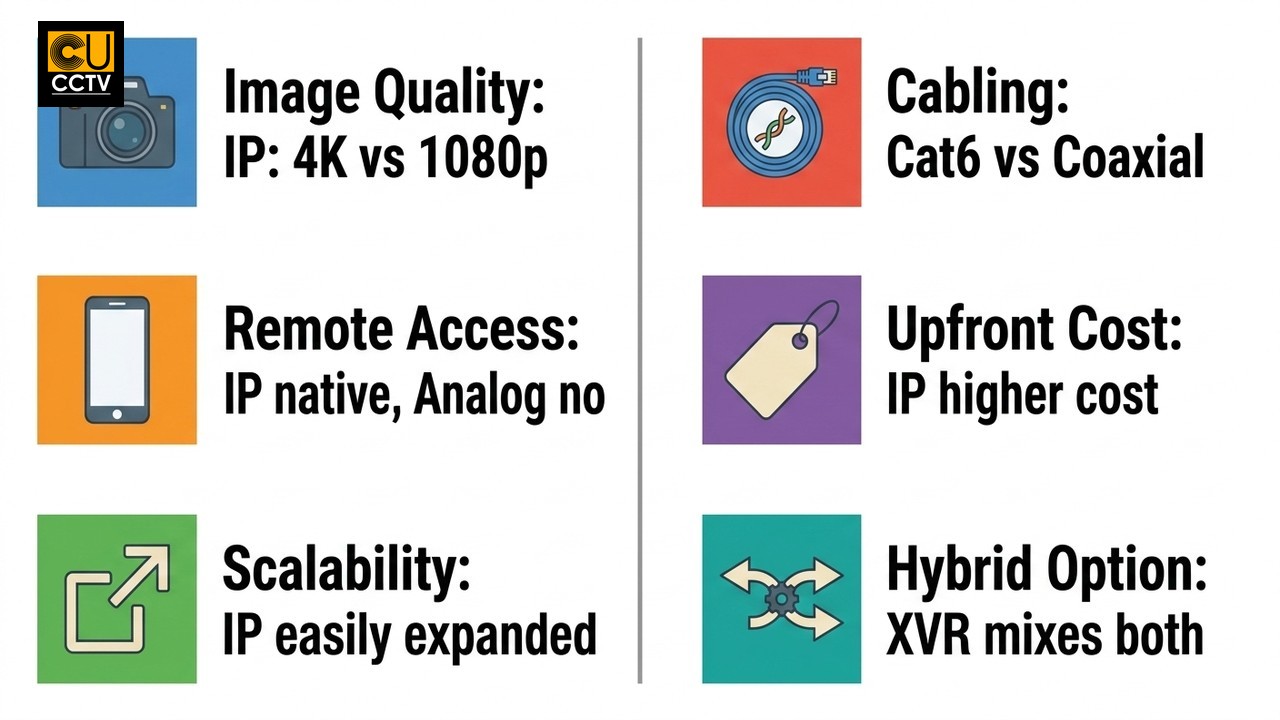
The table below summarises the key differences across the factors that most affect a buying decision.
| Factor | IP CCTV | Analog CCTV |
|---|---|---|
| Image quality | 2 MP and beyond 4K (8 MP+) | Generally capped around 4 MP (1080p) |
| Cabling | Cat5e or Cat6 Ethernet (PoE capable) | Coaxial cable |
| Remote access | Native multi-user remote viewing | Not natively supported |
| Scalability | Easily expanded via network | Fixed number of DVR inputs |
| Upfront cost | Higher initial investment | Lower upfront hardware cost |
| On-camera processing | Analytics handled inside the camera | Requires external hardware for analytics |
| Network dependency | Requires stable network infrastructure | Operates independently of network |
Which System Is Better: IP or Analog CCTV?
Neither system is universally better. The right choice depends on your property, your existing infrastructure, and what you actually need the system to do. IP CCTV suits properties that need high-resolution footage, remote access, or room to expand. Analog CCTV remains a practical, cost-effective option for smaller setups with defined coverage zones, especially where coaxial cabling is already in place.
Image Quality in Real Conditions
Resolution is where the gap between the two technologies is most obvious. IP cameras typically start at 2 MP and extend well beyond 4K (8 MP), while analog video is generally capped at around 4 MP (1080p), according to Matrix Comsec.
That difference becomes important when you need to identify a face or read a number plate at 10 to 15 metres. General area monitoring does not always require that level of detail, and a well-positioned HD analog camera can still provide reliable coverage for straightforward applications.
Where higher IP resolution earns its place is in environments where evidence quality matters: retail entrances, car parks, loading bays, and anywhere footage might need to hold up to scrutiny. For a small domestic setup covering a front door and back garden, the practical advantage of higher resolution diminishes unless you are monitoring a large plot or a wide driveway.
Cabling, Power, and Installation Complexity
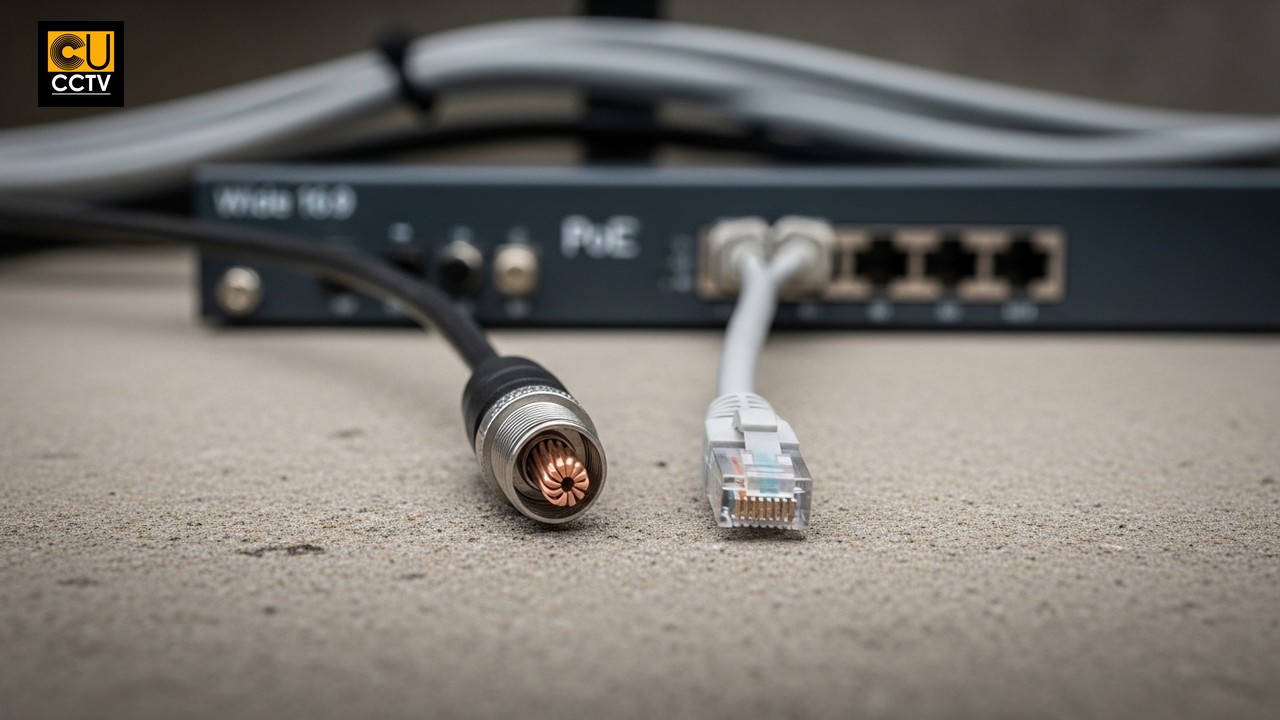
Analog systems run on coaxial cable, which carries the video signal back to the DVR. IP systems use Cat5e or Cat6 Ethernet cable, which can carry both data and power through Power over Ethernet (PoE). PoE eliminates the need to run a separate power cable to each camera, which is a meaningful simplification, particularly on larger sites or in locations where power sockets are not nearby.
That said, if a property already has coaxial cabling in good condition, replacing it with Cat6 adds cost without necessarily adding proportional value. This is where existing infrastructure often tips the decision, and it is the reason hybrid and HD-over-coax solutions deserve serious consideration before committing to a full IP migration.
Key Advantages of IP CCTV Systems
Beyond image quality, IP systems offer practical advantages that matter most in specific scenarios.
Scalability: Analog DVRs have a fixed number of inputs. IP networks can accommodate additional cameras with minimal infrastructure changes, making them a better long-term investment for properties that may grow or change.
Remote viewing: IP cameras support simultaneous access by multiple users or devices. For a business owner managing multiple sites across Greater Manchester, or a homeowner who travels frequently, checking live footage from a smartphone is a genuine operational benefit.
System integration: IP systems connect more cleanly with access control and alarm systems, which matters if you are building a layered security setup. On-camera analytics, including motion detection, compression, and AI-based alerts, are handled inside the camera unit itself.
It is worth noting that a single 2 MP IP camera running at 30 fps with MPEG4 compression uses approximately 6.5 Mbps of bandwidth, according to OptiView USA, so network planning is a real part of the conversation before installation. IP-based surveillance now dominates new deployments, expanding at roughly 14 to 16% annually according to Omdia (2024), which reflects real-world demand for flexible, remotely accessible systems among both residential and commercial buyers.
Where Analog CCTV Still Makes Sense
Analog systems have genuine limitations. Signal quality degrades more noticeably over long cable runs than digital transmission does, and in low-light conditions where detail matters, most analog cameras struggle to keep up with IP alternatives that benefit from better sensors and on-camera processing.
However, analog remains a sensible, cost-effective choice in smaller, simpler setups. A residential property with a few cameras covering close-range, defined zones does not necessarily need the overhead of an IP network. Analog systems also operate independently of network infrastructure, which some users consider an advantage in terms of stability and isolation from network-related vulnerabilities.
The global analog security camera market is projected to reach approximately $6,500 million by 2025 according to Data Insights Market (2024). For the right application, analog remains a practical and reliable option.
Upgrading an Existing Analog System: Hybrid and HD-Over-Coax Options
One of the most overlooked parts of the IP vs analog decision is what to do when a property already has analog infrastructure. Many homeowners and small business owners face this situation when their existing system reaches end of life. A full replacement is not always necessary, and understanding your options can save significant money and disruption.
Upgrading Without Replacing All the Cabling
HD-over-coax formats such as Dahua HDCVI allow existing coaxial cabling to carry high-definition video. You can improve image quality without replacing any cabling infrastructure. This approach defers the need for a full IP migration while still delivering a meaningful improvement in footage quality, and it is particularly practical for properties where coaxial runs are long, numerous, or difficult to replace.
What a Hybrid CCTV System Offers
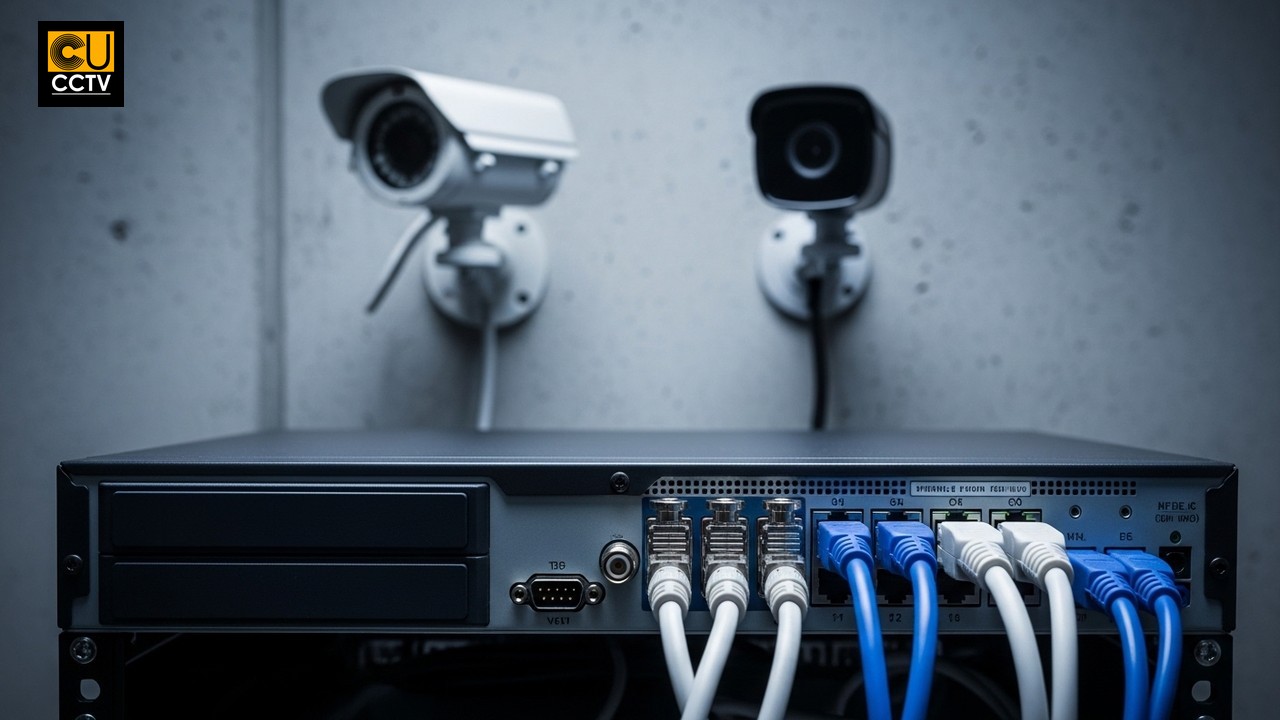
Hybrid DVRs, sometimes called XVR recorders, can run analog and IP cameras on the same recorder simultaneously. You retain your existing analog cameras, connect new IP cameras to the same unit, and manage everything through a single interface. A staged upgrade becomes possible without stripping out equipment that is still working.
For many small business owners, this hybrid path represents the most cost-effective route to a modern setup. Rather than treating the existing installation as a sunk cost, a hybrid approach treats it as a foundation to build on. Understanding the distinction between an NVR, DVR, and XVR recorder is worth doing before you commit to a recorder type. XVR recorders are covered in more depth in a dedicated guide on the CUCCTV website.
| Upgrade Path | Existing Cabling | Best Suited For | Key Benefit |
|---|---|---|---|
| HD-over-coax (e.g. HDCVI) | Keep existing coaxial | Properties with long or numerous coaxial runs | Improved image quality without recabling |
| Hybrid XVR system | Keep existing coaxial, add Cat6 for new cameras | Gradual upgrades, mixed camera estates | Staged migration, single management interface |
| Full IP and NVR installation | New Cat6 throughout | New builds, high camera counts, scalability priorities | Maximum flexibility, remote access, and integration |
When a Full IP Installation Makes More Sense
There are situations where starting fresh with a full IP and NVR setup is the better long-term choice. New builds with no existing cabling allow Cat6 to be planned in from the outset, with no legacy infrastructure to work around. Where camera count is growing and remote access, access control integration, and scalability are priorities, a clean IP installation avoids the compromises of retrofitting analog components. Comparing a Dahua NVR vs DVR in terms of long-term scalability and feature support is a useful exercise at the planning stage.
What to Check Before Choosing a System or Installer in Manchester
Before committing to a system or installer, work through these practical checks.
Site survey: Consider camera placement, cable run lengths, available power sources, lighting conditions, and weather exposure. Ask whether a site survey is included, or arrange one independently before finalising camera positions.
Storage requirements: Storage needs depend on camera count, resolution, and how many days of footage you need to retain. H.265 compression cuts storage needs roughly in half compared to older formats according to Matrix Comsec, which is worth factoring into your hard drive budget.
Recorder compatibility: Check that your chosen recorder type is compatible with the cameras you intend to use, particularly in hybrid setups.
Authorised supply: Confirm that products are supplied by an authorised distributor. This affects warranty support, access to firmware updates, and access to genuine product documentation. Counterfeit and grey-market security hardware is more common than many buyers expect, and creates real problems when firmware updates are unavailable or warranty claims cannot be processed.
Get the Right CCTV System for Your Manchester Property
Navigating the IP CCTV vs analog CCTV decision on your own is manageable with the right information, but having a knowledgeable supplier alongside you makes the process faster and reduces the risk of a costly mismatch between equipment and site. CUCCTV works with both trade customers and end buyers across the UK, helping to match the right equipment to each specific setup rather than defaulting to whatever product carries the highest margin.
Trade account holders are assigned a dedicated account manager who can work through decisions like recorder type, camera specification, and infrastructure planning on a one-to-one basis. For customers who prefer to see and handle equipment before buying, the Manchester and Huddersfield branches offer in-person access to products and expert advice. This makes it straightforward for customers across Greater Manchester, including those based in Salford, Stockport, Oldham, and surrounding areas, to get hands-on guidance before committing to a purchase.
Whether you are planning a straightforward residential upgrade or a more involved commercial installation, CUCCTV’s role is to make sure the equipment you choose matches the job it needs to do. Get in touch with the team or visit the Manchester branch to talk through your project and get clear, practical guidance from people who know the products inside out.
Frequently Asked Questions
Can I mix IP and analog cameras on the same system?
Yes. A hybrid XVR recorder allows you to connect both analog and IP cameras to a single unit and manage them through one interface. This is a practical option for upgrading gradually without replacing all existing equipment at once.
Do IP cameras work without an internet connection?
IP cameras do not require an internet connection to record footage locally. They need a local network, typically via a PoE switch connected to an NVR, but remote viewing over the internet is an optional feature rather than a requirement for the system to function.
How much storage does an IP CCTV system need?
Storage requirements depend on camera count, resolution, frame rate, and how many days of footage you want to retain. Using H.265 compression significantly reduces file sizes compared to older formats, which helps keep hard drive costs manageable even in multi-camera setups.
Is analog CCTV being phased out?
Analog CCTV is not being phased out, though IP systems now dominate new installations. The global analog market continues to serve specific applications, particularly smaller residential and commercial setups where simplicity, cost, and existing coaxial infrastructure make it the more practical choice.
What is PoE and why does it matter for IP CCTV installation?
Power over Ethernet (PoE) allows a single Cat5e or Cat6 cable to carry both data and power to an IP camera. This removes the need for a separate power cable at each camera location, simplifying installation and reducing cost, which is particularly useful where a nearby power socket is not available.
How do I know if a supplier is selling genuine CCTV products?
Confirm that the supplier is an authorised distributor for the brands they sell. Authorised distributors can provide valid warranties, access to firmware updates, and genuine product documentation. Grey-market or counterfeit hardware often lacks these, which can cause problems if a camera fails or requires a security patch.
