
Blog
What to Know Before Buying a Dahua CCTV System

Key Takeaways
This Dahua CCTV buying guide helps UK homeowners and small business owners choose the right cameras, recorder, storage, and authorised supplier with confidence.
- Always buy from an authorised Dahua distributor in the UK to ensure a valid warranty, manufacturer firmware updates, and compatible products; grey market imports carry real risks.
- Match your system to your property before choosing specifications: residential properties typically need four to eight cameras covering all entry points, while commercial sites require higher resolution and longer storage retention.
- For new installations with no existing cabling, an IP NVR system using Power over Ethernet is the stronger long term choice; analogue HDCVI DVR systems remain practical when coaxial cable is already in place.
- Use surveillance grade hard drives for continuous recording, calculate storage based on camera count, resolution, and retention period, and choose a recorder with spare channels and drive bays to allow future expansion.
- Outdoor cameras in the UK should carry a minimum IP67 weatherproofing rating; plan camera placement and mounting height carefully before purchasing, as these decisions directly affect recorder capacity and total system cost.
Picking the right security system rewards careful research and punishes shortcuts. This Dahua CCTV buying guide gives you a practical framework covering product selection, system architecture, supplier credibility, and long-term expandability. Whether you are protecting a terraced house in Salford, a detached property on the outskirts of Manchester, or a small commercial unit in the Northern Quarter, the core principles are the same: match the kit to the property, buy from a trustworthy source, and plan ahead rather than just for today.
Dahua Technology is one of the largest video surveillance manufacturers in the world, with products distributed across 140 countries. Its range spans entry-level residential cameras through to enterprise-grade systems with AI analytics and thermal imaging. That breadth is genuinely useful, but it can make the buying process feel overwhelming without a clear framework. This guide walks through each decision in the order it actually matters.
Table of Contents
Why Dahua Is Worth Considering for UK Properties
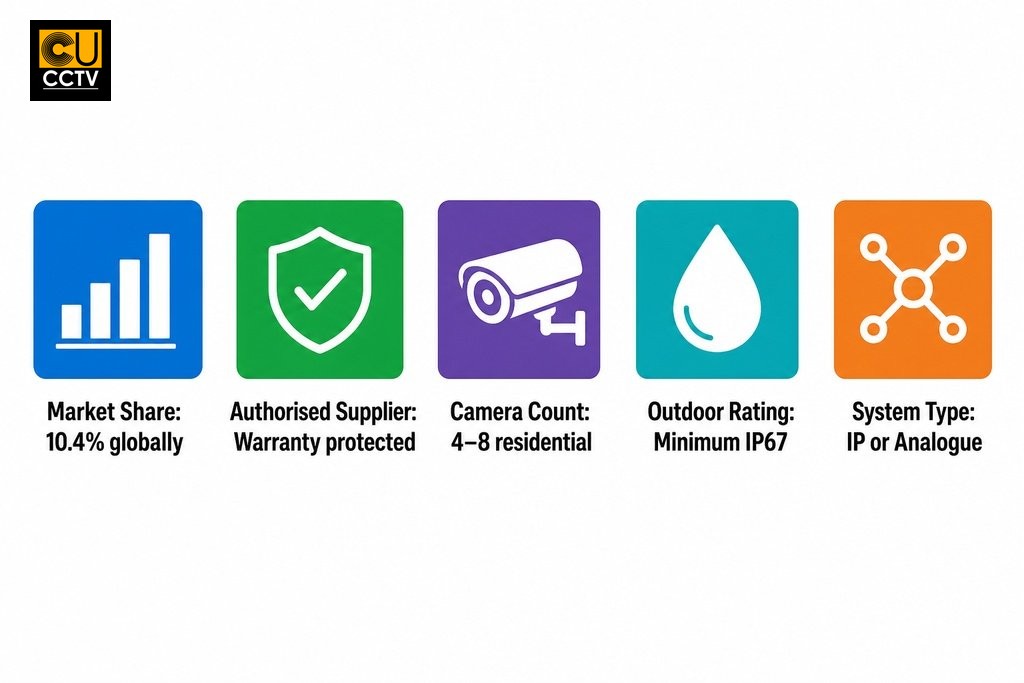
Dahua consistently ranks among the top three largest video surveillance manufacturers globally. According to JVSG’s Worldwide Security Camera Brand Popularity Ratings 2025, Dahua holds 10.4% of the global security camera market, based on anonymised real-world design data from professional installers. That places it firmly among the dominant choices for serious installations, not just budget purchases.
The company invests approximately 10% of its annual turnover in research and development, employing more than 6,000 R&D engineers across four dedicated research institutes, according to IFSEC Insider. With over 800 registered patents spanning AI, IoT, cloud services, and cybersecurity, that level of sustained investment matters for firmware updates, new features, and long-term product support.
Where UK buyers need to be careful is sourcing. Purchasing from an authorised dahua distributor uk directly affects your warranty, access to UK-compatible firmware, and technical support if something goes wrong. Grey-market imports, often sold at a discount on general marketplace platforms, may arrive without valid UK warranties, run outdated firmware, and offer no guarantee of compatibility with other Dahua products you add later. Before committing to any supplier, confirm they hold authorised distributor status for Dahua Technology in the UK.
Matching Your Security Needs to Your Property Type
The first practical step is thinking about your property before thinking about specifications. A detached house with a side return, rear garden, and double garage needs very different coverage to a mid-terrace where the main concerns are the front door and a shared back entry. A small commercial premises with a reception area, stock room, and car park presents further distinct requirements around camera count, resolution, and recording retention. Our dedicated guide on how to choose dahua cameras covers property-specific decisions in greater depth, but the groundwork starts here.
Residential properties generally prioritise entry point coverage, deterrence, and ease of reviewing footage after an incident. Commercial settings tend to need higher resolution for identification, longer storage retention, and sometimes integration with access control or alarm systems. Both scale and purpose should shape your specification before you open a product catalogue.
Indoor vs Outdoor Camera Priorities
Outdoor cameras face conditions that indoor units are never designed to handle. For UK installations, a minimum weatherproofing rating of IP67 is appropriate for externally mounted cameras. That rating confirms the unit is fully dust-tight and capable of withstanding temporary water immersion, which is more than adequate for the persistent rain and damp conditions common across Greater Manchester. For cameras at lower mounting heights or in publicly accessible areas, vandal resistance rated on the IK scale is also worth considering.
Indoor cameras can be physically smaller and less robust, which often makes them less conspicuous and easier to position discreetly. Outdoor camera placement has a cascading effect: mounting height determines the field of view, which affects how many cameras you need, which in turn affects recorder capacity and storage. Getting outdoor placement right early avoids expensive corrections later.
| Factor | Indoor Cameras | Outdoor Cameras |
|---|---|---|
| Weatherproofing | Not required | Minimum IP67 recommended |
| Vandal resistance | Low priority in most cases | IK rating worth considering at accessible heights |
| Physical size | Smaller, more discreet options available | Typically larger to house weatherproof casing |
| Placement complexity | Lower, with fewer environmental constraints | Higher, as mounting height affects field of view and camera count |
| Impact on system cost | Lower per unit | Placement decisions affect recorder capacity and storage needs |
How Many Cameras Do You Actually Need?
For most residential properties, the honest answer is fewer than you might expect, provided you plan placement carefully. Work through your property methodically rather than defaulting to the largest kit available. Identify every entry point, including gates, side passages, and garage access, then map any areas where one camera’s field of view cannot overlap with the next. Blind spots are where incidents happen and where footage gaps frustrate investigations.
For a typical semi-detached or detached home, four to eight cameras generally provide meaningful coverage without redundant overlap. Small commercial properties may need more, especially where interior spaces require monitoring alongside external coverage. If your primary goal is evidence capture rather than live monitoring, wider-angle cameras at strategic positions can cover more ground than a larger number of tighter-angle units.
Choosing Between IP and Analogue Dahua Systems
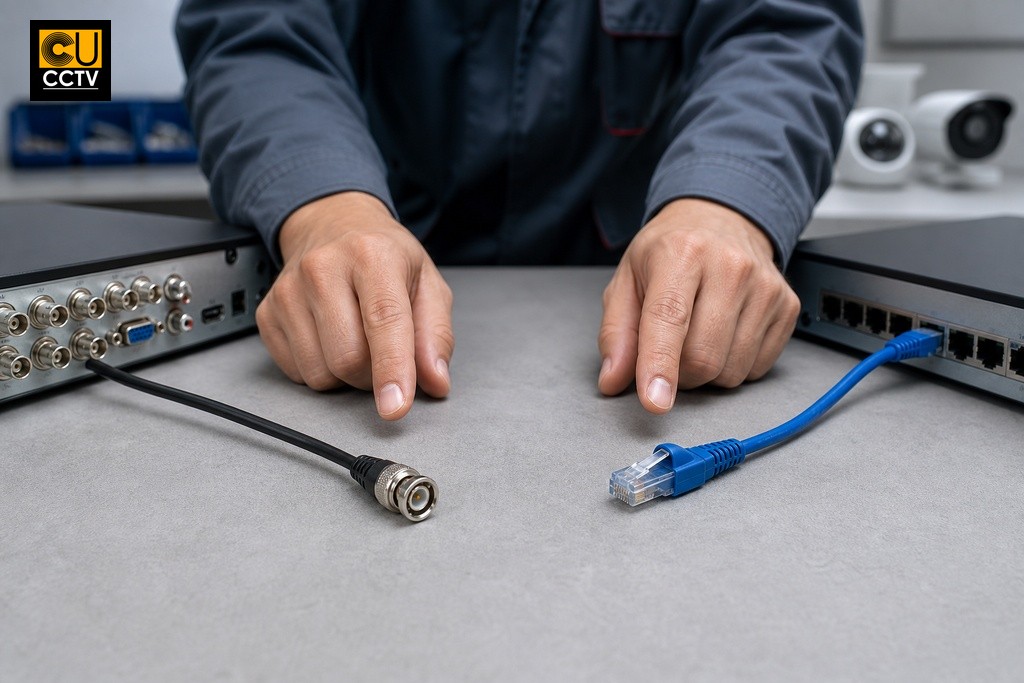
Dahua manufactures both IP-based cameras managed through a Network Video Recorder (NVR) and analogue systems using HDCVI technology managed through a Digital Video Recorder (DVR). For a brand-new installation with no existing infrastructure, IP systems offer clear advantages: higher resolution, simpler scalability, and the ability to carry both power and data through a single ethernet cable using Power over Ethernet (PoE). The dahua ip camera guide covers the technical specifics in depth, but in practical terms, IP systems are the better long-term choice for new builds and clean installations.
Analogue systems remain relevant when you are upgrading an existing setup that already has coaxial cabling in place. Replacing cameras and recorder while retaining existing cable runs can significantly reduce installation cost and disruption. Dahua’s HDCVI technology delivers resolution well beyond traditional analogue standards, so image quality need not be sacrificed to preserve your existing infrastructure. The decision between the two should hinge on your cabling situation, your installation budget, and whether you expect to expand the system over the next few years.
| Factor | IP / NVR System | Analogue HDCVI / DVR System |
|---|---|---|
| Best suited to | New installations with no existing cabling | Upgrades where coaxial cable is already in place |
| Cabling type | Ethernet (single cable carries power and data via PoE) | Coaxial cable (existing runs can be retained) |
| Resolution potential | High, up to 4K and beyond | Good, well above traditional analogue standards |
| Scalability | Easier to expand over time | More dependent on existing infrastructure |
| Installation disruption | Higher for new cable runs | Lower when reusing existing coaxial runs |
| Long-term suitability | Better for future-proofing | Practical where infrastructure replacement is not warranted |
Key Dahua Camera Features Worth Prioritising
Part of buying Dahua CCTV wisely is knowing which features genuinely matter for your use case and which add cost without proportional benefit.
Resolution: A minimum of 1080p is widely recommended for standard coverage. 4K (8MP) is best reserved for applications where licence plate reading or facial identification at distance is genuinely required. Specifying 4K across an entire system for general garden or car park coverage adds cost without meaningfully improving day-to-day performance.
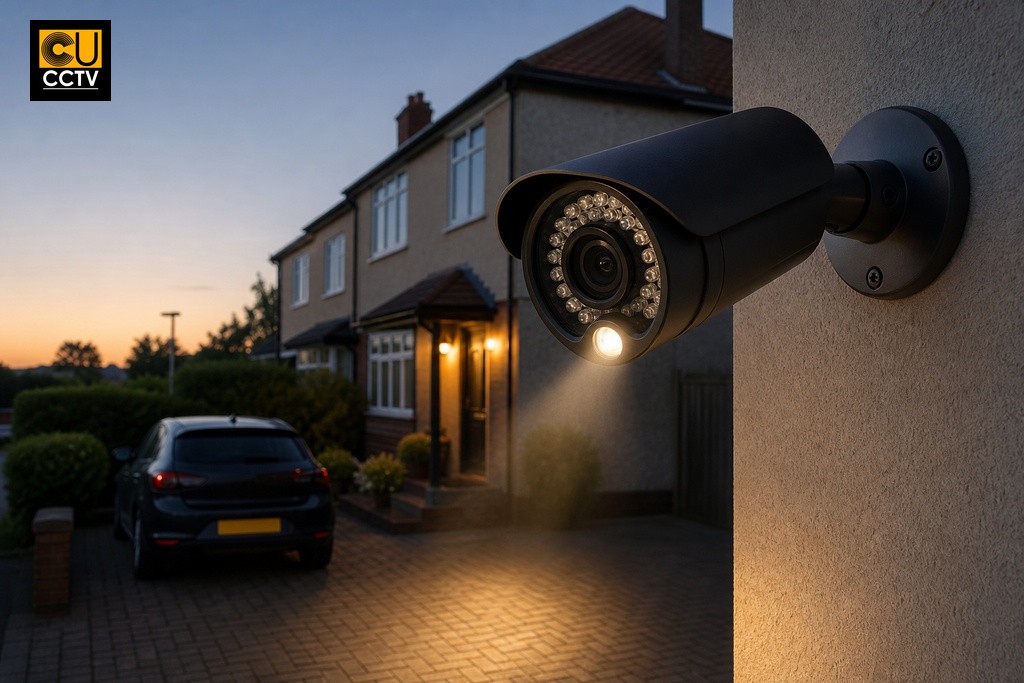
Night vision: Infrared (IR) night vision produces a monochrome image in low light, suitable for most detection and general identification purposes. Dahua’s dual-light and Starlight technologies produce a full-colour image in near-darkness, which is more useful when colour details such as clothing or vehicle colour aid identification.
Active deterrence: Combines visible light with an audible alert when triggered, adding a proactive element beyond passive recording. This feature has matured considerably across Dahua’s recent product generations, though performance does vary between model tiers. Always verify that a camera genuinely includes the functionality rather than a marketing-level mention of it.
Recording and Storage Explained
The dahua nvr buying guide addresses recorder selection in full, but a few fundamentals are worth understanding at the buying stage.
Use surveillance-grade hard drives. Standard desktop drives are not suitable for continuous 24/7 recording. Surveillance-grade drives are engineered for the sustained write cycles CCTV demands; a standard drive risks premature failure and data loss.
Calculate capacity carefully. Local storage depends on camera count, resolution, and how long you need to retain footage. Motion-triggered recording reduces storage consumption significantly compared to continuous recording, though setting detection sensitivity too conservatively risks missing footage.
Cloud backup as a supplement. Available on many Dahua systems, cloud backup is useful for off-site retention of critical footage but is not typically practical as a primary storage method at scale.
Automatic overwrite. When storage fills, most recorders default to overwriting the oldest footage automatically. Matching your storage specification to your retention requirement from the outset avoids problems later.
Installation: Self-Install or Professional?
The self-install versus professional installation question has a direct bearing on which Dahua products are appropriate to specify. Some Dahua systems are designed with straightforward setup in mind, with guided configuration interfaces and plug-and-play PoE switches that suit a technically confident property owner. Others require careful network configuration, cable management, and mounting at height that is better handled by a trained installer. Being honest about your own capability is practical planning, not a limitation.
Cabling is where self-installations most often run into difficulty. PoE cameras require ethernet cable runs from each camera back to the NVR or PoE switch, and routing cable through walls, lofts, or external conduit takes time and the right tools. Underestimating the cabling element leads to compromised camera placement, exposed runs vulnerable to weather or interference, or a system that cannot be expanded later without starting from scratch. Manchester’s older housing stock, including Victorian terraces and Edwardian semis common across areas such as Didsbury, Chorlton, and Levenshulme, can present particular challenges when routing cable internally. If you are using a professional installer, discuss the specification with them before finalising it. Purchasing kit that does not suit their preferred working method is a common and avoidable problem.
What to Check Before You Buy
Before placing any order, a few practical checks protect your investment, whether you are fitting a simple four-camera home system or specifying a more involved commercial setup.
Confirm authorised supplier status. An authorised dahua distributor uk will confirm this directly and clearly. Do not assume; ask.
Check warranty terms. Confirm whether warranty is handled in the UK or requires international returns.
Verify firmware support. UK-sourced Dahua products should receive manufacturer firmware updates, which address security vulnerabilities and add functionality over time.
Check recorder and camera compatibility. Not all Dahua NVRs are compatible with all Dahua camera generations. Mismatched components are one of the most common purchasing mistakes.
Leave room to expand. A recorder with spare channels and a hard drive bay with room for an additional drive costs marginally more upfront but can save a full system replacement when your needs grow.
Following the dahua cctv kit guide principles helps you avoid the most common pitfalls, including inadequate storage relative to camera count and resolution, and buying exactly what you need today with no capacity to add cameras later.
Getting the Right Dahua Security Advice in Manchester
There is a point in most research processes where a ten-minute conversation with someone knowledgeable is more productive than another hour of independent reading. System specification decisions interconnect in ways that are hard to anticipate without experience, and the cost of getting them wrong often exceeds the cost of getting good advice first. This is particularly true if your property has an unusual layout, existing cabling of unknown quality, or a specific requirement such as ANPR or integration with an existing alarm system.
CUCCTV operates as an authorised Dahua distributor with physical stores in Manchester and Huddersfield, so customers across Greater Manchester and the wider North of England can come in, see products in person, and talk through their requirements with staff who know the range in depth. Trade customers are assigned a dedicated account manager for ongoing consultation and technical support. For straightforward setups, the online store covers the dahua product selection guide and full specification process clearly. For more complex installations, whether a multi-building commercial site or a system that needs to integrate with access control and intruder alarms, project consultation is available to get the specification right before the first product is ordered.
If you are ready to move forward or simply want a second opinion on your current thinking, CUCCTV’s team is here to help. Reach out through the website, visit one of the branch stores, or register a trade account to access dedicated support from the start of your project.
Frequently Asked Questions About Dahua CCTV
What is the difference between a Dahua NVR and DVR system?
An NVR (Network Video Recorder) works with IP cameras connected over ethernet, while a DVR (Digital Video Recorder) works with analogue cameras over coaxial cable. For new installations with no existing cabling, an NVR system is generally the better choice. If coaxial cable is already in place, a Dahua DVR using HDCVI technology lets you upgrade cameras and recorder while keeping your existing infrastructure.
How much storage does a Dahua CCTV system need?
Storage depends on camera count, resolution, and your required retention period. Motion-triggered recording reduces consumption significantly compared to continuous recording. As a rough guide, a four-camera 1080p system recording on motion for 30 days typically needs around 1 to 2TB, though your specific setup may vary. Always use surveillance-grade hard drives rather than standard desktop drives.
Do I need to buy from an authorised Dahua distributor in the UK?
Yes. Buying from an authorised UK distributor ensures you receive a valid warranty, manufacturer firmware updates, and compatible products. Grey-market imports may lack these protections, leaving you without support if hardware fails or security vulnerabilities need patching.
How many cameras do I need for a typical UK home?
Most semi-detached or detached homes are well covered by four to eight cameras, provided placement is planned carefully. Prioritise all entry points, including front door, back door, gates, and side passages, before adding cameras for wider area coverage. A well-placed wider-angle camera can often eliminate the need for an additional unit.
Can I install a Dahua CCTV system myself?
Some Dahua systems suit confident self-installation, particularly smaller PoE NVR kits with guided setup interfaces. The main challenge is routing ethernet cable through walls, lofts, or external conduit. If your property has older or solid-wall construction, professional installation is worth considering to avoid compromised camera placement or exposed cable runs.
What IP rating should outdoor Dahua cameras have for UK weather?
A minimum of IP67 is appropriate for externally mounted cameras in the UK. This confirms the unit is fully dust-tight and can withstand temporary water immersion, making it well suited to persistent rain and damp conditions. For cameras in publicly accessible areas at low mounting heights, also consider models with a suitable IK vandal-resistance rating.
