
Blog
Access Control Components Every Trade Installer Should Know


Key Takeaways
A practical guide covering every core access control component trade installers must understand to specify, wire, and commission jobs accurately and avoid costly errors.
- Controllers, credential readers, request to exit devices, electronic locks, and power supplies each play a distinct role; specifying any one without understanding how it interacts with the others is the leading cause of callbacks and commissioning failures.
- Protocol compatibility between readers and controllers must be confirmed before ordering; Wiegand is widely supported but lacks encryption, while OSDP offers bidirectional encrypted communication and is increasingly preferred on commercial and enterprise sites.
- Fail mode selection on electronic locks is a compliance issue, not just a technical one; fail safe locks release on power loss and are required on fire escape routes, while fail secure locks remain locked and suit server rooms or secure storage.
- Power supply sizing must account for the combined load of every component on the circuit, including in rush current from magnetic locks and voltage drop across long cable runs, as undersized supplies are a leading cause of intermittent faults after handover.
- A thorough site survey and pre order checklist covering door construction, controller capacity, lock fail mode, and full power budget prevents the majority of on site problems and protects both installer margin and client confidence.
Whether you are quoting your first commercial access job or managing a multi-door networked installation across a Manchester city centre office block or industrial estate, understanding how access control components work in practical terms makes the difference between a clean handover and a call-back. Knowing what each part does, how it communicates with the rest of the system, and where it can go wrong lets you scope jobs accurately, avoid costly compatibility errors, and advise clients with confidence. This guide is written for trade installers, not end-users, so the focus stays on what you actually need to know before you order, wire, and commission.
Door access control systems sit within a broader security ecosystem that increasingly overlaps with network infrastructure, IP video, and cloud management. Physical and logical access control are now converging, meaning the door entry hardware you specify must account for network connectivity, software integration, and cybersecurity considerations alongside the traditional mechanical requirements. Getting this right from the outset protects your margin, your reputation, and your client’s site.
Table of Contents
What Are the Main Components of an Access Control System?
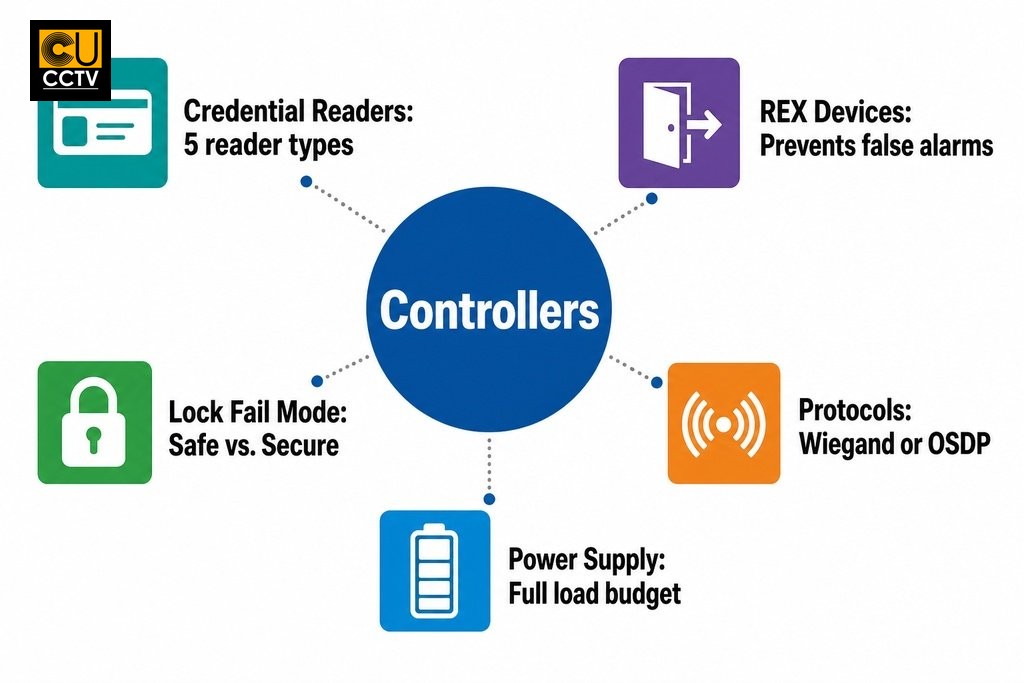
Every access control installation is built from the same foundational layer of components: controllers, credential readers, request-to-exit devices, electronic locks, and power supplies. Each plays a distinct role, and none of them function reliably in isolation. Understanding how these parts communicate and depend on each other is what separates a well-designed system from one that creates ongoing fault-finding headaches.
A large share of access control callbacks trace back to one root cause: something was specified without a full picture of how it would interact with everything else on the door. Controllers ordered without checking reader protocol compatibility, locks wired without accounting for load, or REX devices skipped entirely to save cost are common mistakes that are almost always avoidable with the right knowledge upfront.
There is also a clear client communication advantage. ASIS International research identifies access control systems as highly effective when integrated with complementary security layers rather than deployed as standalone solutions. When you can explain this to a client and back it up with a well-specified system, you move from being a box-shifter to a trusted adviser, a distinction that drives repeat business and referrals, particularly in the commercial sector across Greater Manchester and beyond.
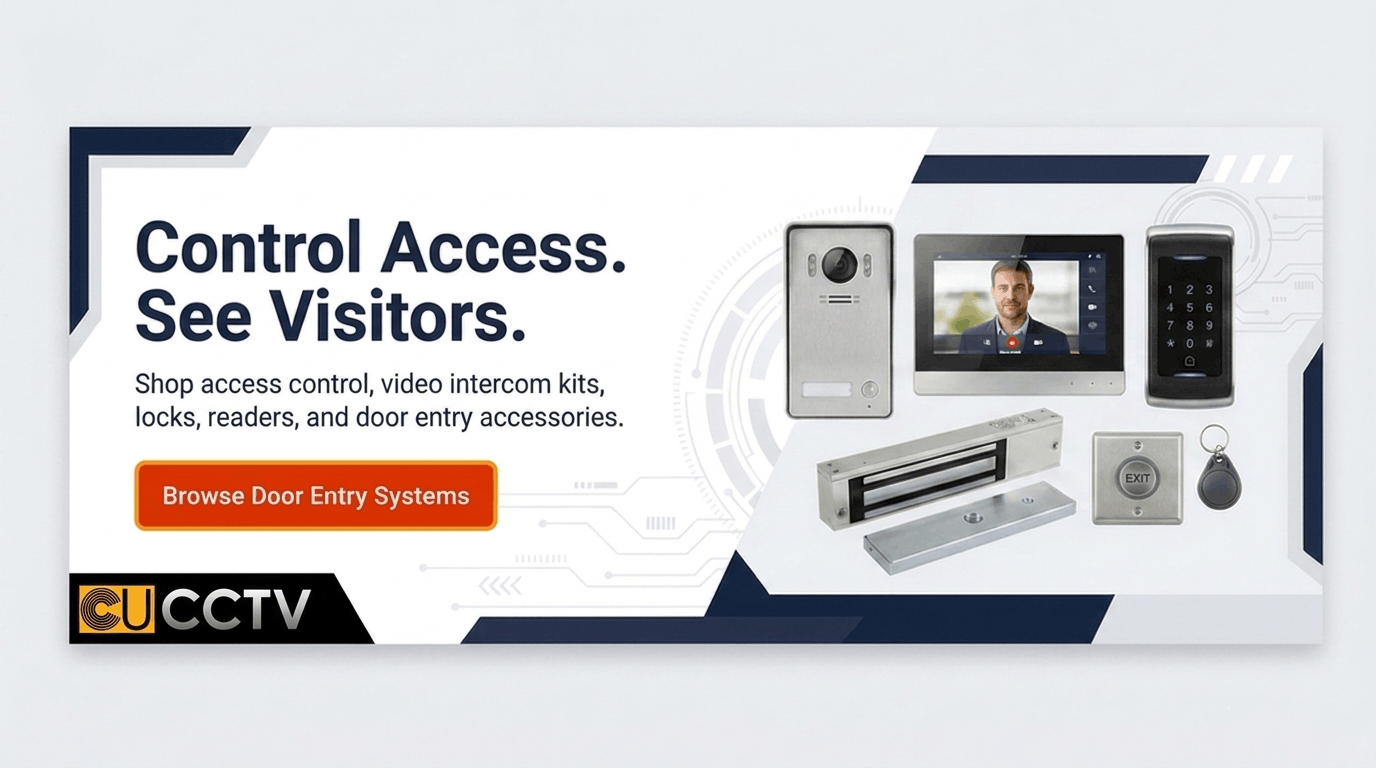
Access Controllers and Control Panels
The controller is the decision-making hub of any access control system. It receives signals from readers, cross-references credentials against its database, and sends the command that determines whether a door opens or stays locked. Single-door controllers handle one entry point independently, straightforward and cost-effective for residential or small commercial sites. Multi-door panels manage several doors from a central point, reducing hardware cost per door and simplifying system management on larger projects.
Before committing to any controller, confirm its door capacity, the number of users it supports, and the communication protocol it uses. These are non-negotiable steps before placing your order.
Credential Readers and Entry Control Options
The reader is what the user interacts with, and the credential is what proves their identity to the system. Keypads suit lower-security or internal applications where PIN management is practical. Proximity card and fob readers remain workhorses on commercial sites. It is worth noting that a 2019 study by ASIS International found 51% of respondents were still using 125 kHz low-frequency proximity card technology, widely regarded as the least secure access format and now in decline. Biometric readers add a layer of verification suited to higher-security environments, while access credentials explained through Bluetooth Low Energy or NFC are increasingly specified on modern commercial fitouts.
Explaining these options to clients in plain language helps them understand what they are paying for and why the technology choice matters for their specific site.
| Reader Type | Typical Application | Security Level | Management Complexity |
|---|---|---|---|
| Keypad (PIN) | Lower-security or internal doors | Low | Low; PIN changes managed in software |
| 125 kHz Proximity Card/Fob | General commercial sites | Low; widely regarded as least secure format | Low to medium |
| High-Frequency Smart Card | Commercial and enterprise sites | Medium to high | Medium |
| Biometric | Higher-security environments | High | Medium to high; enrolment required |
| Mobile Credential (BLE/NFC) | Modern commercial fitouts | Medium to high | Medium; app or cloud managed |
Request-to-Exit and Door Monitoring Devices
Overlooking exit buttons and emergency release devices is one of the most common causes of system failures at commissioning. A request-to-exit (REX) sensor, whether a passive infrared device or a push-button exit release, signals the controller that someone is leaving legitimately, preventing a false-alarm trigger from the door contact. Door contacts tell the system whether a door is open or closed, which is essential for monitoring, audit logging, and alarm integration.
Skipping these components to trim a quote is a false economy. You will spend more time on-site resolving issues after handover than you saved at the quoting stage.
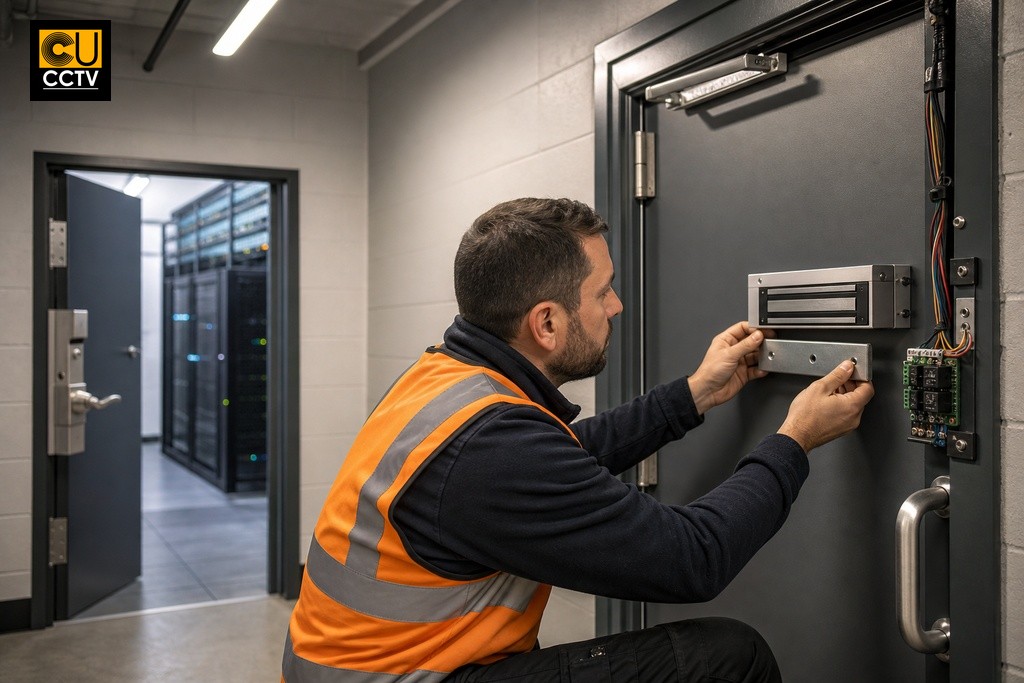
Door Entry Hardware in Manchester: What Changes by Site Type
Specifying door entry hardware purely by product type misses the site-specific variables that determine whether the spec will actually work. This is particularly relevant across Greater Manchester, where you may be working in anything from a Victorian-era converted mill in Ancoats to a modern glass-fronted office development in Spinningfields.
Door frame construction is a primary variable: timber, steel, and aluminium curtain wall systems each have different requirements for how a strike or lock body is fitted and supported. Duty cycle ratings matter equally. High-traffic commercial entrances demand hardware rated far above what is acceptable on a quiet internal door, and getting this wrong leads to premature mechanical failure. Intercoms and video door entry units must also be matched to the controller they connect to, and on IP-based systems the network must reliably carry the video stream.
Common installer mistakes at this stage include selecting an intercom whose protocol is incompatible with the access controller already on order, or failing to confirm whether the door frame can physically accommodate the chosen strike without costly modifications. A thorough site survey before any hardware is specified saves significant time and expense on install day.
Electronic Lock Components: Fail-Safe vs. Fail-Secure
Electronic lock components fall into three broad categories: electric strikes, magnetic locks, and electromechanical locks. Each integrates differently with the controller and has distinct implications for fail-safe versus fail-secure operation. Fail-safe locks release when power is lost, which is required on fire escape routes and doors that must allow free egress under applicable building and fire safety codes. Fail-secure locks hold when power is lost, appropriate for server rooms or secure storage where the default state must be locked. Specifying the wrong fail mode on a fire door is not a minor error; it is a compliance failure with serious consequences.
Wiring requirements and load ratings deserve equal attention. Magnetic locks draw a consistent current, and that load must be factored into the power supply design from the start. Maglocks explained at a component level involve understanding their holding force rating, their current draw, and whether the controller’s relay output can handle direct switching or requires an intermediate relay board. Always verify these figures against the product datasheet before finalising any lock specification.
| Characteristic | Fail-Safe | Fail-Secure |
|---|---|---|
| State on power loss | Unlocks (releases) | Remains locked |
| Typical application | Fire escape routes, egress doors | Server rooms, secure storage |
| Regulatory consideration | Required where free egress is mandated by fire and building codes | Appropriate where default-locked state is required |
| Common lock types | Magnetic locks, some electric strikes | Electromechanical locks, some electric strikes |
| Compliance risk if misspecified | High; fire safety breach on secure doors | High; egress failure on fire escape routes |
Protocol Compatibility: Will All the Components Work Together?
An access system hardware overview that stops at individual components misses the most important question: will they all work together? Protocol compatibility is where multi-product specifications most often unravel.
Wiegand is widely supported across readers and controllers, but it is a one-way protocol with no built-in encryption, which creates vulnerability in higher-security applications. OSDP (Open Supervised Device Protocol) addresses this with bidirectional, encrypted communication and is increasingly specified on commercial and enterprise jobs. IP-based systems open up network-integrated management but require careful attention to cybersecurity configuration, particularly as zero-trust networking expectations shape how access hardware is deployed.
Read product datasheets critically before committing to a product mix. Check the controller’s reader port capacity, its supported protocols, and the maximum number of credentials it can store. Flag integration issues during the quoting stage, not after hardware has arrived on-site. If a client wants to mix manufacturers, verify compatibility explicitly rather than assuming it. When in doubt, contact your distributor’s technical support before the order goes in.
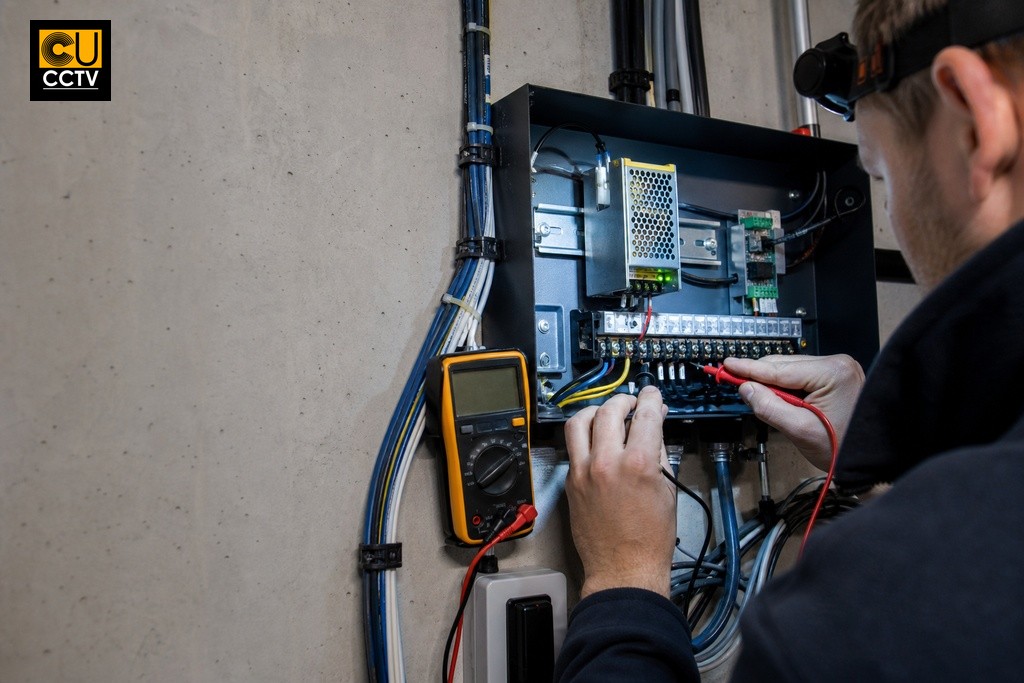
Power Supplies and Cable Requirements
Power supplies for access control are a recurring source of faults on installations, typically because the power budget was calculated for the locks alone without accounting for the readers, REX devices, and door contacts on the same circuit. To size the power supply correctly, calculate the combined load across all components on each circuit, add a margin for in-rush current on magnetic locks, and factor in cable run distances. Voltage drop over long runs can cause intermittent lock or reader failures that are genuinely difficult to diagnose after commissioning. Using undersized cable to save cost is a false economy; specifying the correct power supply and cable gauge from the outset is straightforward when the full component load is known before the order is placed.
When to Seek Technical Support Before Finalising a Specification
Most single-door jobs on straightforward sites can be scoped confidently by an experienced installer. The risk increases significantly on multi-door networked systems, environments where different manufacturers’ hardware must coexist, and sites with specific compliance requirements such as care homes, schools, or any building where fire door regulations dictate specific lock behaviour.
On these jobs, getting technical input before finalising the specification is not a sign of uncertainty; it is professional due diligence that protects both you and your client. This applies whether you are working on a small retail unit in the Northern Quarter or a multi-site commercial rollout across Greater Manchester. CUCCTV’s trade account structure is built around exactly this kind of pre-quote support. Each trade account holder is assigned a dedicated account manager who can work through specification questions, check compatibility across the product range, and draw on Dahua-authorised product knowledge to identify potential integration issues before they become on-site problems.
Pre-Order Checklist for Access Control Parts
A disciplined pre-order process saves more time than any shortcut. Before placing any access control parts order, confirm the following:
- Site survey notes capture door construction type, frame material, and physical space available for hardware.
- Your chosen controller supports the reader protocol you are specifying.
- Door and user capacity matches the job’s current scope with room to grow.
- The lock’s fail mode is appropriate for each door’s regulatory requirements.
- Full power budget is calculated across every component on each circuit.
Sourcing from a stocked, trade-focused distributor matters more than many installers initially expect. Substituted components, partial shipments, or products that arrive with different firmware than expected can each introduce compatibility problems that delay commissioning and frustrate clients. Having a single point of contact who knows your account, understands the project, and can confirm stock availability before you commit to an installation date is a practical advantage that CUCCTV’s trade service is specifically designed to provide. If you are ready to discuss your next access control job in Manchester or want to check compatibility on a current specification, get in touch with the CUCCTV trade team and let your account manager take it from there.
Frequently Asked Questions Related to Access Control Components
What is the difference between a fail-safe and a fail-secure electronic lock?
A fail-safe lock releases when power is lost, allowing free egress, which is required on fire escape routes. A fail-secure lock remains locked when power is lost, suited to server rooms or secure storage. Specifying the wrong fail mode on a regulated door is a compliance failure, not just a technical one.
What communication protocols do access control readers and controllers use?
The two most common protocols are Wiegand and OSDP. Wiegand is widely supported but offers no built-in encryption, making it less suitable for higher-security sites. OSDP provides bidirectional, encrypted communication and is increasingly the preferred choice on commercial and enterprise installations.
Why is a request-to-exit (REX) device necessary on an access-controlled door?
A REX device signals the controller that a person is exiting legitimately, preventing the door contact from triggering a false alarm. Without it, every outward opening registers as an unauthorised event, creating unreliable audit logs and alarm integration problems that are difficult to resolve after commissioning.
How do I calculate the correct power supply size for an access control installation?
Add the current draw of every component on the circuit, including locks, readers, REX devices, and door contacts, then include a margin for magnetic lock in-rush current. Also account for voltage drop across long cable runs, as undersized cable or an underpowered supply is a leading cause of intermittent faults after handover.
When should a trade installer seek technical support before finalising an access control specification?
Seek technical input on any multi-door networked system, mixed-manufacturer environment, or site with specific compliance requirements such as fire door regulations. Raising compatibility questions with your distributor before ordering costs nothing and can prevent significant rework once hardware is on-site.
