
Blog
Dahua vs Hikvision: Which Brand Suits Your Property?


Key Takeaways
This guide helps UK property owners decide between Dahua and Hikvision by comparing real world performance, pricing, and use cases across residential and commercial settings.
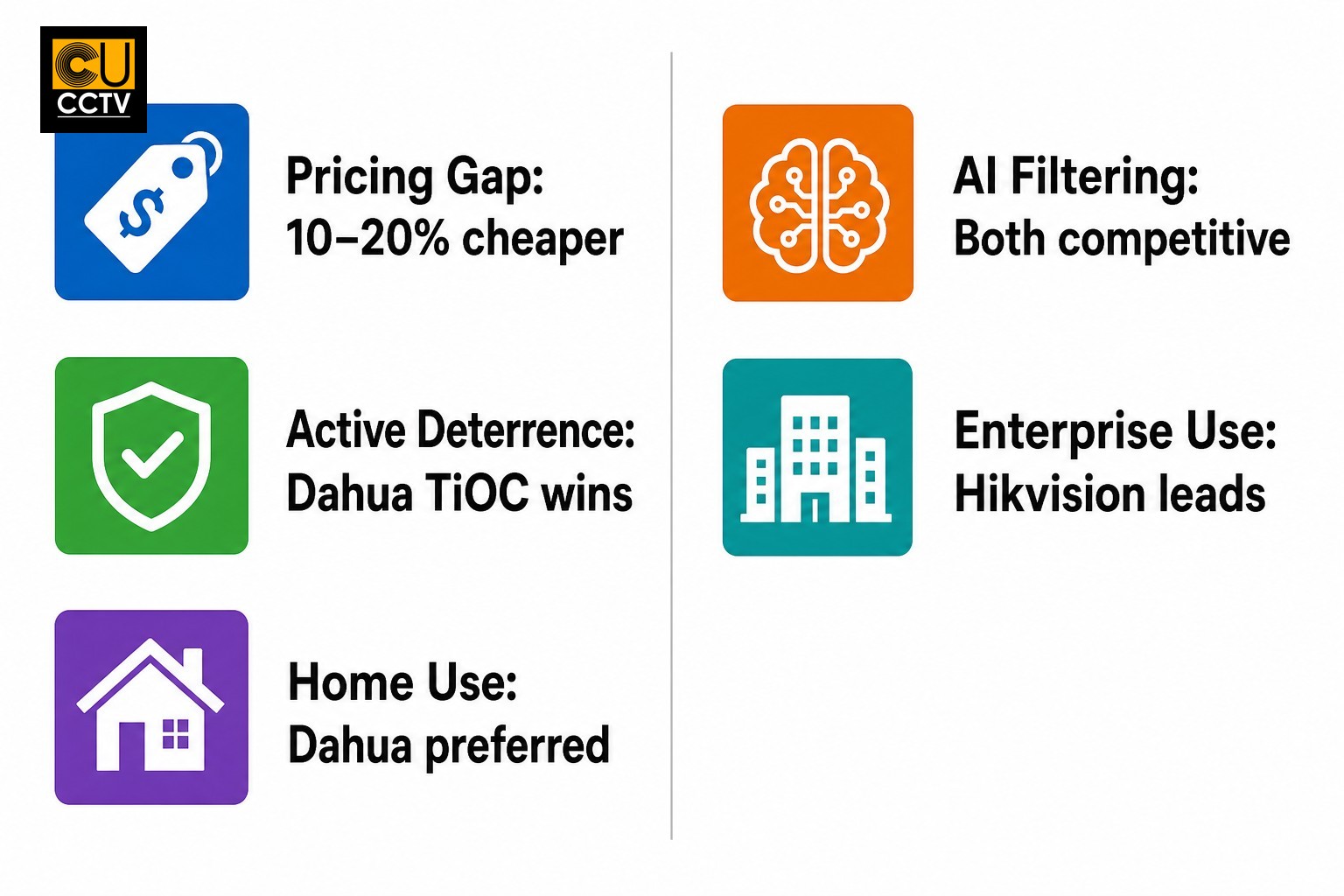
- Dahua is typically priced 10 to 20 percent lower than equivalent Hikvision products, making it a strong choice for residential or small commercial installations where budget matters without sacrificing core image quality.
- Both brands offer capable AI motion filtering: Hikvision’s AcuSense and Dahua’s SMD Plus both reduce false alerts effectively, though independent testing found Hikvision marginally more accurate at distinguishing humans from animals.
- Committing to either brand means committing to an ecosystem of cameras, recorders, and software; mixing brands often limits access to advanced features like AI alerts and two way audio.
- Hikvision suits larger or enterprise level installations requiring deep third party integrations, while Dahua’s TiOC range excels where active deterrence through sirens, strobes, and audio is the priority.
- Purchasing through an authorised UK distributor like CUCCTV ensures genuine products, manufacturer backed warranty coverage, and local support; grey market equipment can look identical but perform inconsistently.
When you start researching CCTV systems seriously, the Dahua vs Hikvision comparison is almost impossible to avoid. These two manufacturers sit at the top of the global surveillance market, and for good reason. Both produce reliable, feature-rich cameras across a range of price points, and both have earned the trust of installers and property owners worldwide. But that near-equal standing is precisely what makes choosing between them feel difficult. If both brands are credible, how do you know which one belongs on your property?
This article takes a practical, decision-led approach rather than an exhaustive spec-by-spec breakdown. Whether you are securing a terraced home in Salford, fitting out a small retail unit in the Northern Quarter, or planning a multi-camera office system across Greater Manchester, the goal is to help you understand what the differences actually mean in use and where each brand tends to perform better. Think of this as your starting point within a broader Dahua camera comparison guide, covering the core brand decision before you move into more specific territory such as individual product lines, app behaviour, or warranty considerations.
Table of Contents
Why This Comparison Matters Before You Buy
Choosing a CCTV brand is not the same as choosing a single camera. When you commit to either Dahua or Hikvision, you are largely committing to an ecosystem that includes recorders, software, mobile apps, and future expansion options. A property owner who buys into one ecosystem and later wants to add cameras or swap recorders will almost always find it easier to stay within the same brand rather than mix systems.
Hikvision and Dahua together account for over 40% of the global security camera market, according to multiple industry sources citing manufacturer data. That level of combined dominance means most CCTV products you encounter in the UK market will trace back to one of these two brands in some form, whether sold under their own name or through white-label arrangements.
Spec sheets rarely tell the full story. A camera’s resolution or frame rate is only useful if the recording setup, network capacity, and software interface support it properly. This article focuses on those real-world factors, not numbers that look impressive on a product listing but rarely determine whether a system actually works well.
Key Differences Between Dahua and Hikvision
At a hardware level, the two brands share more in common than most buyers expect. An independent technical review by CCTVSG found that comparable 4MP models from both manufacturers use the same 1/3-inch progressive scan CMOS sensor and true 120dB wide dynamic range, meaning base image quality is broadly equivalent at similar price points. The meaningful differences emerge in processing, software, and the broader product architecture built around those sensors.
Both brands have developed AI-powered motion filtering: AcuSense for Hikvision and SMD Plus for Dahua. In practice, both work well for residential and small commercial use. Independent testing by CCTVShop Australia found Hikvision’s AcuSense marginally more accurate at distinguishing humans from large animals, while Dahua’s SMD Plus performed competitively at a lower price point.
App and Ecosystem Experience
Each brand runs its own end-to-end ecosystem covering cameras, NVRs, and remote viewing software. A dedicated Dahua camera app comparison is covered separately, but at a high level, Dahua DMSS offers live view, playback, push notifications, and flexibility in storage options and device pairing for mixed installations. Hikvision Hik-Connect is frequently cited by installers as slightly more intuitive for first-time configuration.
Both brands produce ONVIF-compliant products, so cameras from either manufacturer can generally communicate with third-party recorders. That said, advanced features including AI alerts, two-way audio, and motion filtering almost always require matching the camera to the same brand’s recorder. If you are extending an existing setup, verify full compatibility before purchasing, not just basic ONVIF connectivity.
Pricing and Build Quality
Both Dahua and Hikvision offer entry-level, mid-range, and professional product tiers. Dahua is generally priced 10 to 20% lower than equivalent Hikvision products across comparable lines, based on independent comparison testing by CCTVShop Australia. For a four-to-eight-camera installation on a modest budget, that difference adds up without a significant sacrifice in image quality or durability.
At the professional end, Hikvision’s advantage becomes more pronounced. Enterprise-grade features, broader third-party integrations, and a wider choice of specialist camera formats give it an edge for complex installations. Dahua’s TiOC 2.0 technology, which combines sirens, strobe lighting, and two-way audio into a single deterrence unit, stands out as a strong option where active deterrence matters more than deep software integration, according to a comparative review by Jim’s Security Australia.
| Feature | Dahua | Hikvision |
|---|---|---|
| Base image quality (comparable models) | Broadly equivalent | Broadly equivalent |
| AI motion filtering | SMD Plus, competitive at a lower price | AcuSense, marginally more accurate in testing |
| Remote viewing app | DMSS, flexible and supports mixed installations | Hik-Connect, cited as slightly more intuitive to configure |
| Pricing vs comparable models | Generally 10 to 20% lower | Higher across comparable tiers |
| Active deterrence | TiOC 2.0, siren, strobe, and two-way audio in one unit | Available but less integrated at entry level |
| Enterprise and third-party integration | Moderate | Broader, more developed ecosystem |
| ONVIF compliance | Yes | Yes |
Which Brand Is Right for Your Manchester Property?
Comparing technical specifications in isolation is less useful than working through your actual site requirements. Site size, lighting conditions, number of cameras, and how you plan to access footage all influence which brand will serve you better long-term.
Residential Properties
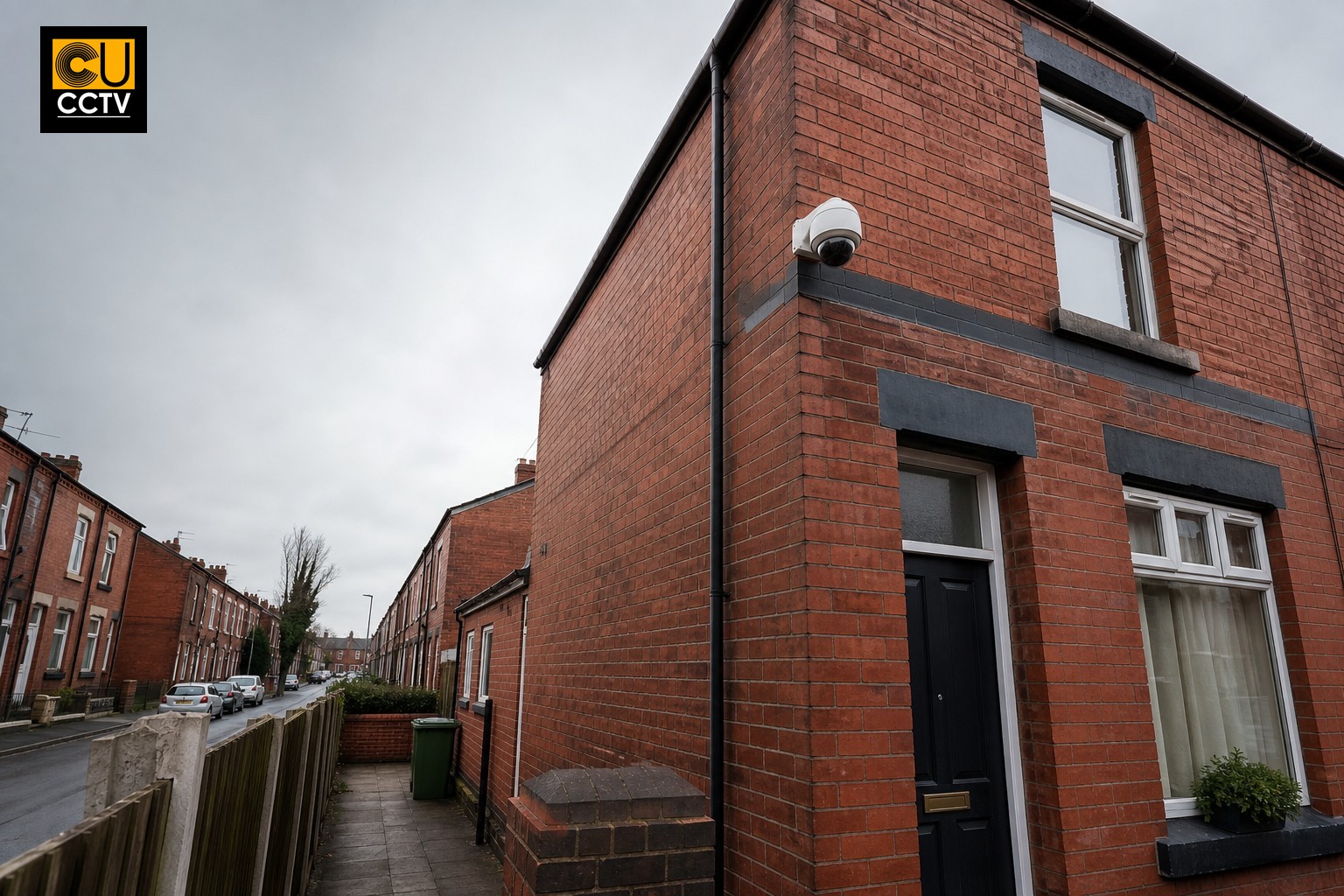
Dahua is frequently recommended by installers as the more practical choice for homes. The lower entry cost, capable AI filtering, and straightforward setup suit homeowners who want reliable coverage without enterprise-grade complexity. Whether you are securing a semi-detached in Didsbury, a back-to-back terrace in Oldham, or a newer build in Salford Quays, a typical four-to-eight-camera installation sits comfortably within Dahua’s mid-range ecosystem, with room to expand using compatible accessories.
Small Retail and Office Environments
Small retail units and offices across Manchester city centre, Ancoats, and surrounding commercial districts sit in a middle ground where either brand can work well. If staff monitoring, footfall analytics, or integration with access control systems matters, Hikvision’s broader feature set becomes more relevant. Gartner Peer Insights recorded a 4.1-star rating for Hikvision from verified enterprise reviewers, with users citing stability and ease of configuration as primary strengths. For retail environments where active deterrence or perimeter alerts are the priority, Dahua’s TiOC range offers a compelling and cost-effective alternative.
| Property Type | Recommended Brand | Key Reason |
|---|---|---|
| Residential (homes, terraced, semi-detached) | Dahua | Lower cost, capable AI filtering, straightforward setup |
| Small retail, active deterrence priority | Dahua | TiOC range offers integrated siren, strobe, and two-way audio |
| Small retail or office with analytics and access control | Hikvision | Broader feature set, footfall analytics, access control integration |
| Large commercial or enterprise | Hikvision | Wider third-party integrations, specialist camera formats, enterprise ecosystem |
| Multi-site or compliance-driven deployments | Hikvision | More developed enterprise ecosystem, globally recognised brand |
What to Check Before You Commit to Either Brand
A few practical checks before purchasing can save significant time and cost later. Ask your installer or supplier the following questions before confirming any order:
- Is this product covered by a UK warranty, and who handles claims locally?
- Will firmware updates be available for this model beyond the initial purchase period?
- Are replacement parts and accessories available in the UK without long lead times?
- Has this camera been tested with the recorder or NVR you are pairing it with?
Firmware update policies and long-term software support are worth verifying too. Both brands release regular updates, but frequency and accessibility vary depending on the product tier and whether you are purchasing through an authorised channel. Dahua warranty considerations, including what is and is not covered and how claims are handled in the UK, are detailed in a separate article within this series.
Why Dahua Makes Sense for Most Manchester Buyers
As an authorised Dahua distributor based in Manchester, CUCCTV offers more than just product availability. Purchasing through an official channel means the equipment is genuine, covered by a manufacturer-backed warranty, and supported by staff who know the product range in detail. That distinction matters because the UK market contains a significant volume of grey-market or counterfeit CCTV equipment that looks identical on paper but performs inconsistently in practice.
The Dahua features that resonate most with property owners across Greater Manchester include:
- Active deterrence — the TiOC range combines sirens, strobes, and two-way audio in a single unit.
- Competitive pricing — consistently 10 to 20% lower than equivalent Hikvision models.
- Full-colour low-light performance — usable footage in poorly lit conditions common around residential streets and commercial yards, including many older terraced and industrial conversion properties throughout Greater Manchester.
CUCCTV’s stores in Manchester and Huddersfield mean that trade customers and end users across the North West can speak with someone in person rather than relying on online listings alone. That local access to expert advice is particularly useful when you need to understand how specific products will work together before committing to a full system.
When to Speak With a Specialist First
A standard brand comparison covers the majority of residential and small commercial projects comfortably. However, some installations involve enough variables that a direct conversation with a specialist is the more reliable path. Larger sites covering multiple buildings, environments with specific compliance requirements, or projects that need to integrate CCTV with existing access control or alarm systems all benefit from a guided consultation.
CUCCTV’s trade account service assigns a dedicated account manager to each registered trade customer, providing project-specific support that goes beyond what any article can offer. If your site falls outside a straightforward domestic install, or if you are managing multiple properties across Manchester and the wider North West and need consistent equipment choices across all of them, that personalised support is worth using before you finalise your specification.
How to Make Your Final Decision
The most important takeaway from any honest Dahua vs Hikvision comparison is that neither brand is universally superior. Both are credible, well-supported manufacturers with strong product ranges. The right choice depends on your property, your budget, the features you will actually use, and the support available to you after purchase.
Work through this short checklist to clarify your decision before purchasing:
- What size is your site, and how many cameras do you need?
- What is your realistic budget, including installation if applicable?
- Do you need active deterrence features, or is recording and monitoring your primary goal?
- Are you extending an existing system or starting from scratch?
- Will you be purchasing through an authorised UK supplier with local support?
If your answers point toward a cost-effective, capable system for a residential or small commercial property, Dahua through an authorised distributor is a strong starting point. If you need enterprise-grade analytics, deep third-party integration, or a globally recognised brand for institutional reasons, Hikvision warrants serious consideration. Either way, the choice should be driven by your property’s needs, not brand loyalty or marketing claims.
CUCCTV is here to help you work through that decision with confidence. Whether you want to browse the full Dahua range online, visit the Manchester store, or open a trade account with dedicated manager support, the team is ready to help you secure what matters most. Get in touch today to discuss your project or view the complete product range.
Frequently Asked Questions
Is Dahua or Hikvision better for home use in the UK?
Dahua is generally the more practical choice for residential properties. Its lower price point, capable AI filtering through SMD Plus, and straightforward setup make it well suited to home installations. For most UK homeowners who want reliable coverage without complex configuration, Dahua through an authorised UK distributor offers excellent value.
Can I mix Dahua and Hikvision cameras on the same system?
Basic connectivity is possible using ONVIF compliance, but advanced features such as AI alerts, motion filtering, and two-way audio typically require matching cameras and recorders from the same brand. Mixing brands usually means losing access to those smart features, so staying within one ecosystem is the safer approach.
Which brand has better AI detection, Dahua or Hikvision?
Both brands offer reliable AI motion filtering. Hikvision’s AcuSense has tested marginally more accurate at distinguishing humans from large animals in independent reviews. Dahua’s SMD Plus performs competitively and is available at a lower price. For most residential and small commercial sites, the practical difference between the two is minimal.
Are Dahua and Hikvision products available with UK warranties?
Yes, but coverage depends on the purchase channel. Buying through an authorised UK distributor ensures the equipment is genuine and covered by a manufacturer-backed warranty with local support. Grey-market or counterfeit products may look identical but often lack proper warranty coverage. Always confirm warranty terms before purchasing.
Which brand is more cost-effective for a small business in Manchester?
Dahua is typically 10 to 20% less expensive than comparable Hikvision products, making it the more cost-effective option for businesses with straightforward requirements. Hikvision becomes more relevant when you need deeper analytics or integration with third-party access control systems, which are more common in larger commercial environments.
Does Hikvision offer better enterprise features than Dahua?
For large or complex installations, Hikvision offers broader third-party integrations, a wider range of specialist camera formats, and a globally recognised brand that some institutions require. Dahua remains competitive for most commercial sites, but Hikvision’s enterprise ecosystem is more developed for multi-site or compliance-driven deployments.
